When a project starts in Antwerp on Monday, expands to Liège two weeks later, and adds night-shift technicians by the end of the month, housing stops being an admin task and becomes an operational issue. That is exactly where the question of the meilleures solutions logement équipes mobiles matters. The right setup affects budget control, worker rest, commute times, and how much coordination your team has to manage day after day.
For companies moving staff across Belgium, the best option is rarely the one that looks cheapest on the first quote. It is the option that stays workable over several weeks or months, fits group occupancy, and reduces friction for HR, procurement, and site management. In practice, that usually means comparing hotels, short-term rentals, and furnished corporate housing based on how teams actually live and work.
What the best housing solutions for mobile teams need to solve
Mobile teams do not need leisure travel accommodations. They need places that are ready to use, close enough to the worksite, and structured for repeated daily routines. A technician finishing a long shift needs a real kitchen, reliable Wi-Fi, laundry access, and enough space to rest. A site manager needs fewer invoices, fewer check-in problems, and less time spent fixing housing issues.
This is why housing decisions should start with operations rather than room rates. A low nightly rate can become expensive if it creates longer commutes, meal costs, fragmented billing, or frequent relocations. The best housing solution is the one that supports the assignment with the least disruption.
Hotels work for short stays, not always for team deployments
Hotels are often the default choice because they are familiar and fast to book. For one or two employees staying a few nights, that can make sense. The process is simple, the locations are usually central, and services such as reception and housekeeping are already built in.
The problem starts when the stay becomes longer or the team becomes larger. Booking multiple rooms for several weeks creates higher total costs, scattered invoices, and limited shared space. Workers also lose the practical benefits of apartment-style living. Daily restaurant meals add up quickly, and hotel rooms are not designed for group occupancy or long rotations.
There is also the issue of consistency. A hotel may have availability one week and none the next, especially near business hubs or event periods. For project-based staffing, unstable availability creates unnecessary risk.
Standard short-term rentals can look flexible, but they are uneven
On paper, short-term rental platforms seem attractive. They offer apartments and houses in many locations, and some units may appear cost-effective. For small groups on short notice, they can sometimes fill a gap.
But from a business perspective, the quality is uneven. Furnishing standards vary, invoicing is not always adapted to corporate procurement, and the host model is not built around operational housing needs. One apartment may be ideal, while the next lacks parking, enough beds, proper internet, or clear contract terms.
That inconsistency is the real issue. If you are housing six to sixteen workers, you need predictability more than variety. You need to know what is included, who responds when there is a problem, and whether the property can support the team for the full duration of the assignment.
Furnished corporate housing is usually the strongest fit
For medium-term stays, furnished corporate housing is often the most practical answer. It sits between the rigid cost structure of hotels and the uncertainty of standard short-term rentals. More importantly, it is designed around business use.
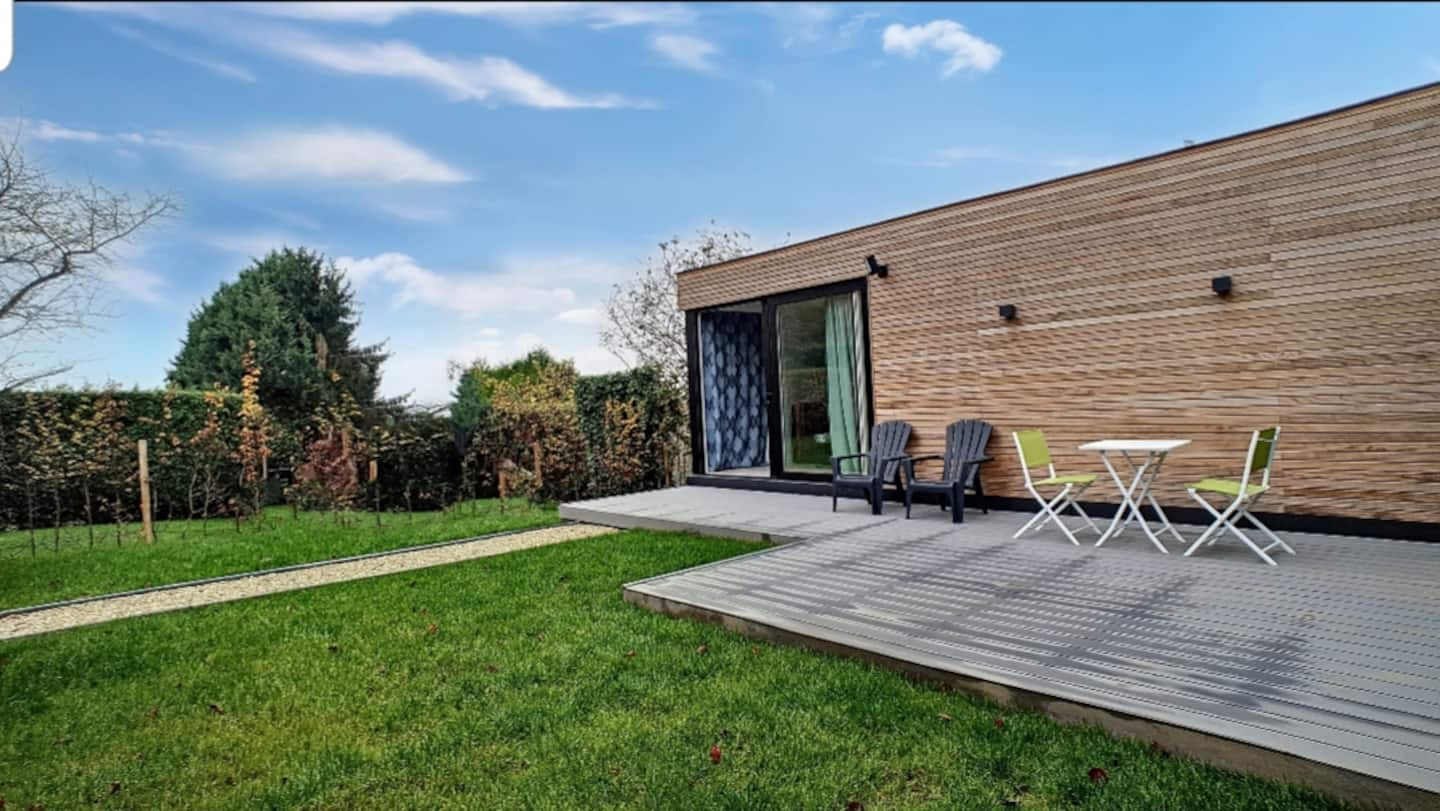
A ready-to-live-in house or apartment gives teams the basics they actually need - furnished rooms, equipped kitchens, Wi-Fi, utilities, and immediate occupancy. When those elements are bundled into one offer, planning becomes easier. Finance gets a clearer cost structure, operations gets faster deployment, and employees get a more stable living setup.
This model becomes especially efficient when several workers need to stay together. Group occupancy lowers the per-person cost compared with multiple hotel rooms, while shared spaces improve day-to-day comfort. Over one month or longer, that difference is usually significant.
The meilleures solutions logement équipes mobiles are judged on five factors
The meilleures solutions logement équipes mobiles are not just about price. They should be evaluated across five practical criteria: occupancy fit, contract flexibility, included services, location logic, and administrative simplicity.
Occupancy fit comes first. If a property is designed for single travelers, it will create pressure when used for group accommodation. Teams need enough beds, functional shared areas, and a layout that can handle daily use by several adults.
Contract flexibility matters because projects change. Start dates move, team sizes increase, and extensions happen with little warning. A housing setup that only works on fixed terms can create cost exposure or force last-minute rebooking.
Included services affect the real budget. Utilities, internet, furniture, and kitchen equipment should not be treated as extras if the stay lasts several weeks. When these are included, the total cost is easier to forecast.
Location logic is often underestimated. The ideal address is not necessarily city-center. It is the location that keeps commute times reasonable, offers access to major routes, and supports shift patterns.
Administrative simplicity can save more time than many companies expect. Consolidated invoicing, business-ready contracts, and one point of contact reduce the internal workload across HR, operations, and accounting.
Why group housing often outperforms room-by-room booking
For companies deploying crews, group housing usually delivers better operational value than booking rooms one by one. It centralizes the team, simplifies transport planning, and gives workers a more practical living environment. Shared kitchens and common areas also matter more than they may seem at first. They reduce daily food costs and make longer stays more sustainable.
That does not mean every team should be housed together. If roles, schedules, or project locations differ too much, separate units may be more efficient. But when the team works on the same site and follows a similar rhythm, shared furnished housing is often the better business decision.
There is also a human factor. People working away from home for weeks or months generally cope better in accommodations that feel livable rather than temporary. Better rest and a more stable routine support attendance, morale, and productivity.
What to ask before choosing a provider
Before confirming any housing arrangement, companies should check a few details that directly affect performance during the stay. Capacity is one, but it is not enough on its own. Ask how the property is configured, what equipment is included, whether utilities and Wi-Fi are part of the rate, and how quickly the unit can be occupied.
It is also worth confirming how billing works. Corporate clients usually need straightforward invoicing, clear rental periods, and a contact person who can respond quickly. If these basics are vague at the quote stage, they rarely become easier later.
For employers housing workers in Belgium, this is where a specialized provider has an advantage. Belga Promo, for example, focuses on furnished houses and apartments prepared for professional teams, with capacities suited to group occupancy and contract structures aligned with business needs. That kind of specialization reduces uncertainty.
Cost control is more than finding the lowest rate
The cheapest visible option is often not the most economical over the full assignment. Hotel stays create recurring meal costs and can require multiple bookings as availability changes. Low-cost rentals may come with missing essentials, deposit complexity, or support delays that consume staff time.
A stronger approach is to compare total living cost per worker per month. Include housing, utilities, internet, transport implications, food flexibility, and admin time. Once those factors are measured together, turnkey furnished accommodation often proves more competitive than it first appears.
This is especially true for medium-term stays. The longer the project runs, the more value companies get from accommodations that are stable, fully equipped, and easy to manage from one contract to the next.
The right answer depends on the assignment
There is no single housing format that fits every deployment. A three-night client visit does not need the same setup as a four-month industrial project. Small executive travel may still suit hotels. A single consultant may prefer an individual apartment. But for workforce mobility, rotating crews, and project teams, furnished group housing is usually the most balanced option.
The key is to choose housing that matches how your people actually work, not how travel is traditionally booked. When accommodation is ready, predictable, and built for teams, it stops being a recurring problem and becomes one less thing your operation has to carry.
A good housing decision should make the project easier to run from day one, not cheaper only on paper.