When a company needs to house employees or a project team in Belgium for a few months, the choice usually comes down to two routes: sign a private rental with a landlord, or book managed housing from a provider that delivers a furnished, equipped property under a business contract. Private rentals can look cheaper on paper, but they shift setup, administration and risk onto your team. Managed housing bundles those elements into one contract and one invoice.
In short: private rentals tend to suit long, stable stays with a small number of people and someone in-house who can manage a property. Managed housing tends to suit teams, tight timelines, uncertain project end dates and companies that want predictable costs with minimal administration. The rest of this guide breaks down the differences so you can decide based on your actual project, not on the headline rent.
What each option actually means
Private rentals
A private rental is a lease between your company (or sometimes an individual employee) and a landlord or letting agency. The property is often unfurnished or only partly furnished, and the lease is usually built around a household living there as its main residence.
In practice, the company takes on the role of tenant. That means arranging furniture, kitchen equipment, utility contracts, internet installation, the rental deposit, the move-in inspection and the move-out inspection. If something breaks, someone on your side has to chase the landlord. If the project ends early, the lease terms decide what happens, and those terms were rarely written with a temporary work team in mind.
Managed housing
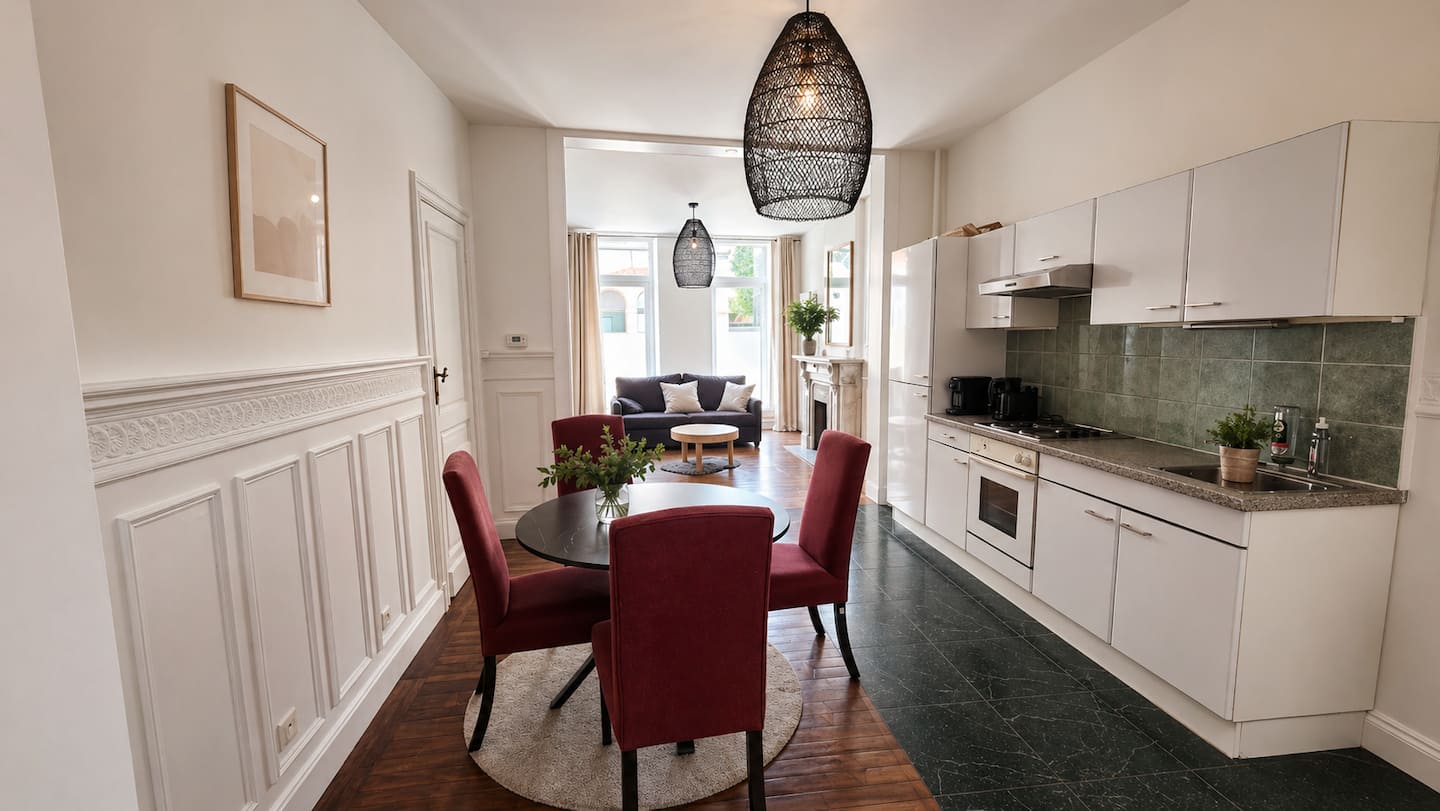
Managed housing (often called corporate housing) is a property that is already furnished, equipped and connected, rented to a company under a contract designed for business use. The provider prepares the home, keeps utilities and Wi-Fi running and invoices the company directly.
The key difference is responsibility. With managed housing, the provider handles the property itself and you deal with a single contact. Your role shifts from "tenant and property manager" to "client". If you want a detailed view of the furnishing side alone, our article on furnished leases versus unfurnished rentals covers it in depth.
Side-by-side comparison
The table below summarises how the two models typically differ for a company housing a team in Belgium. Exact terms always depend on the specific landlord or provider, so treat this as a starting framework.
| Criterion | Private rental | Managed housing |
|---|---|---|
| Furniture and kitchen | Often missing or partial; company sources it | Fully furnished and equipped on arrival |
| Utilities and internet | Company opens and manages contracts | Included and already running |
| Time to move in | Search, negotiation, setup: often weeks | Ready-to-live-in once booked |
| Contract length | Usually built for long residential occupancy | Designed for one month to 12+ months |
| Extensions and early exits | Depend on lease terms and notice rules | Flexibility built into the business contract |
| Invoicing | Rent plus separate bills from several suppliers | One invoice to the company |
| Group occupancy | May be restricted by the lease or landlord | Properties intended for group use |
| Internal workload | High: someone must manage the property | Low: single point of contact |
Where private rentals hide costs and workload
The monthly rent of a private property is only one line of the real budget. Before comparing it to a managed option, list everything your company would need to do or pay for to make the house usable for a team. A typical setup list looks like this:
- Finding the property: searching listings, visiting, negotiating and checking that the landlord accepts company occupancy by several workers.
- Deposit and guarantees: tying up cash in a rental guarantee for the duration of the lease.
- Furnishing: beds, mattresses, wardrobes, tables, chairs, sofas, and enough of each for the whole team.
- Equipping the kitchen: cookware, crockery, appliances if missing, and the small items people forget until day one.
- Utilities: opening electricity, gas and water contracts, reading meters, and closing them at the end.
- Internet: ordering a connection, waiting for installation, and making sure it is fast enough for several people working remotely or calling home in the evening.
- Inspections: organising the entry and exit inventory, and handling any dispute over damage.
- Ongoing issues: being the contact when the boiler stops or the Wi-Fi drops.
- Exit: removing or selling furniture, cancelling contracts and recovering the deposit.
Each of these steps costs money, staff time or both. None of them are difficult on their own, but together they turn an HR manager or site manager into a part-time property manager. For short or medium stays, that effort is spread over too few months to make sense.
There is also budget uncertainty. Utility bills vary, setup purchases add up, and an early exit can leave you paying rent on an empty property. If predictable budgets matter to your finance team, our guide to fixed rent versus variable lodging costs explains why an all-inclusive monthly amount is easier to forecast.
The contract question
Standard residential leases in Belgium are generally designed around people living in a property as their home, and the rules can differ by region. Notice periods, duration categories and occupancy conditions may not match a project that could end in four months or run on for ten. This is not legal advice, and every situation is different, so if you consider a private lease for a team, have it reviewed by your legal advisor before signing, with particular attention to early termination, subletting or occupancy by several workers, and who is liable for damage.
When a private rental can make sense
Private rentals are not wrong for every situation. They can be a reasonable choice when most of these conditions apply:
- The stay is long and the end date is reasonably certain, well beyond a year.
- The group is small and stable, for example one relocated manager and their family.
- The employee or a dedicated in-house team has time to manage the property.
- The company already owns or can easily source furniture.
- There is no pressure on the move-in date.
A typical example is a senior employee relocating to Belgium on a multi-year contract who wants to choose their own neighbourhood and eventually set up a household. In that case, the setup effort is spread over a long period, and the employee often prefers to personalise the home.
When managed housing is the better fit
Managed housing tends to win when speed, flexibility and administrative simplicity matter more than owning every detail of the setup. Here are three realistic scenarios.
Scenario 1: An industrial project with a fixed start date
A contractor sends eight technicians to a site near Feluy for an estimated five months. The team needs to arrive on a set Monday, and nobody knows whether commissioning will slip by a few weeks. Signing a private lease, furnishing a house for eight and opening utilities in time would be risky. A furnished group property close to the site, with Wi-Fi and utilities already running, lets the team arrive with a suitcase and start work the next morning. If the project runs over, the stay can be extended instead of renegotiating a residential lease. Our article on rental extension policies for company team housing covers how to plan for that.
Scenario 2: Rotating crews
A company rotates teams of four to six specialists every few weeks on a long maintenance contract near Charleroi. With a private rental, every rotation raises questions about who is responsible for the house and whether the lease even allows changing occupants. With managed housing, the property is rented to the company, and the company decides who stays.
Scenario 3: A temporary office team relocating near Brussels
A foreign company sends a small team to set up operations near Waterloo for six to nine months. They want comfortable apartments, reliable internet for video calls and one monthly invoice that finance can process easily. Managed housing delivers the comfort without anyone on the team spending their first weeks buying furniture and calling utility suppliers.
The invoicing advantage
For finance and procurement teams, the administrative side is often the deciding factor. A private rental generates rent payments, utility bills, internet invoices, furniture receipts and deposit transactions, sometimes paid by employees and claimed back later. Managed housing replaces this with one invoice addressed to the company. If you are weighing these flows, see our comparison of company invoicing versus employee reimbursements.
A decision checklist for HR and operations
Use these questions to decide which model fits your project. If you answer "yes" to most of the first group, managed housing is likely the better route.
Signals that point to managed housing:
- Is the stay between one month and about a year, or is the end date uncertain?
- Are you housing several people together, such as a crew of 4, 8 or up to 16?
- Does the team need to move in within days or a few weeks?
- Does your company lack the time or staff to furnish, equip and manage a property?
- Does finance want one predictable monthly amount and one invoice?
- Might you need to extend, shorten or change occupants during the stay?
Signals that point to a private rental:
- Is the stay clearly long-term and stable?
- Is the occupant a single employee or family who wants to choose and personalise the home?
- Is there a person who can handle setup, maintenance contacts and exit?
- Has your legal advisor confirmed the lease suits company occupancy?
Questions to ask any managed housing provider:
- What exactly is included in the monthly price (furniture, kitchen, Wi-Fi, utilities)?
- What is not included, so there are no surprises?
- What is the minimum stay and how do extensions work?
- Can the contract and invoices be issued to the company?
- How far is the property from the work site, and is there parking?
- Who do employees contact if something stops working?
For a more complete sourcing framework, the temporary housing procurement checklist is a useful companion to this one.
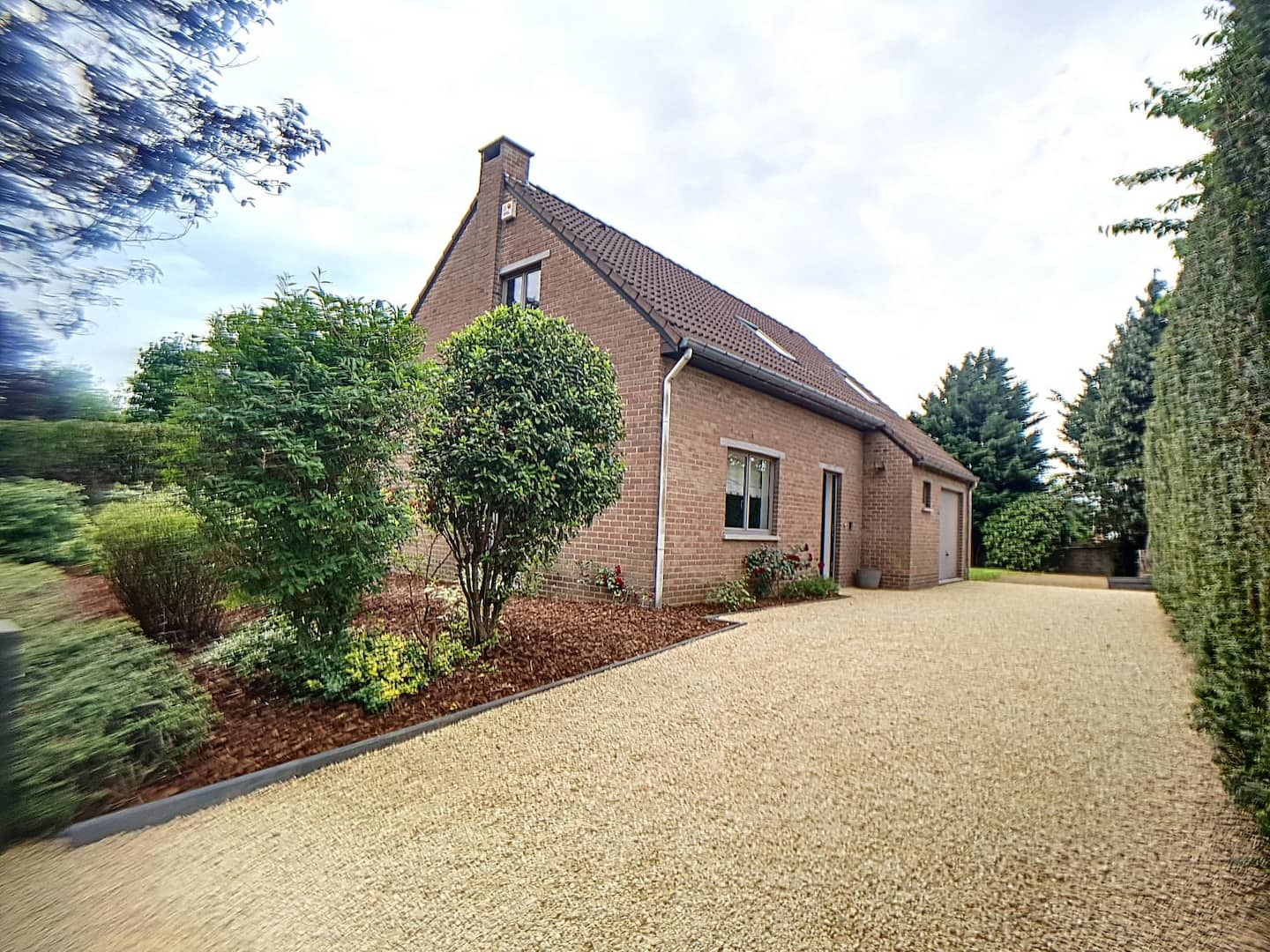
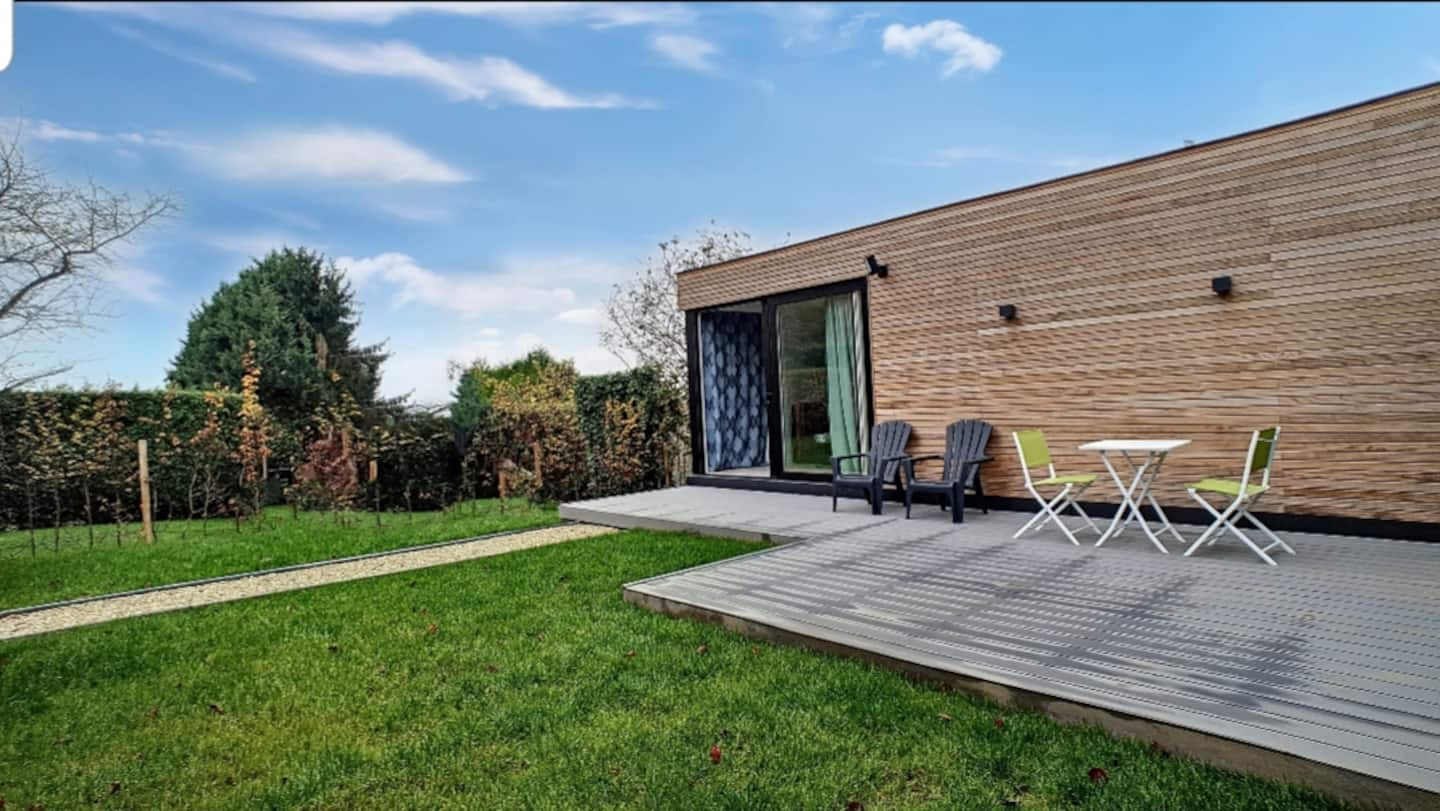
At Belgapromo, we answer these questions upfront: our houses and apartments for 2 to 16 people in Nivelles, Feluy, Waterloo, Beersel and Lodelinsart come furnished, with equipped kitchens, high-speed Wi-Fi and utilities, on flexible contracts invoiced to the company. You can review what is included in our housing before you even get in touch. Cleaning, catering and transport are not part of our offer, so plan for those separately if your team needs them.
Check availability for your team
If your project is a medium-length stay, involves several people or comes with a tight start date, managed housing will usually save you time, budget surprises and administrative effort compared with a private rental. The best next step is to match your team size, dates and work site against available properties.
You can browse our furnished properties with live availability, or request a quote with your team size, location and expected duration. We reply in French, Dutch, English or Spanish, and you can also reach us on WhatsApp at +32 495 300 771.