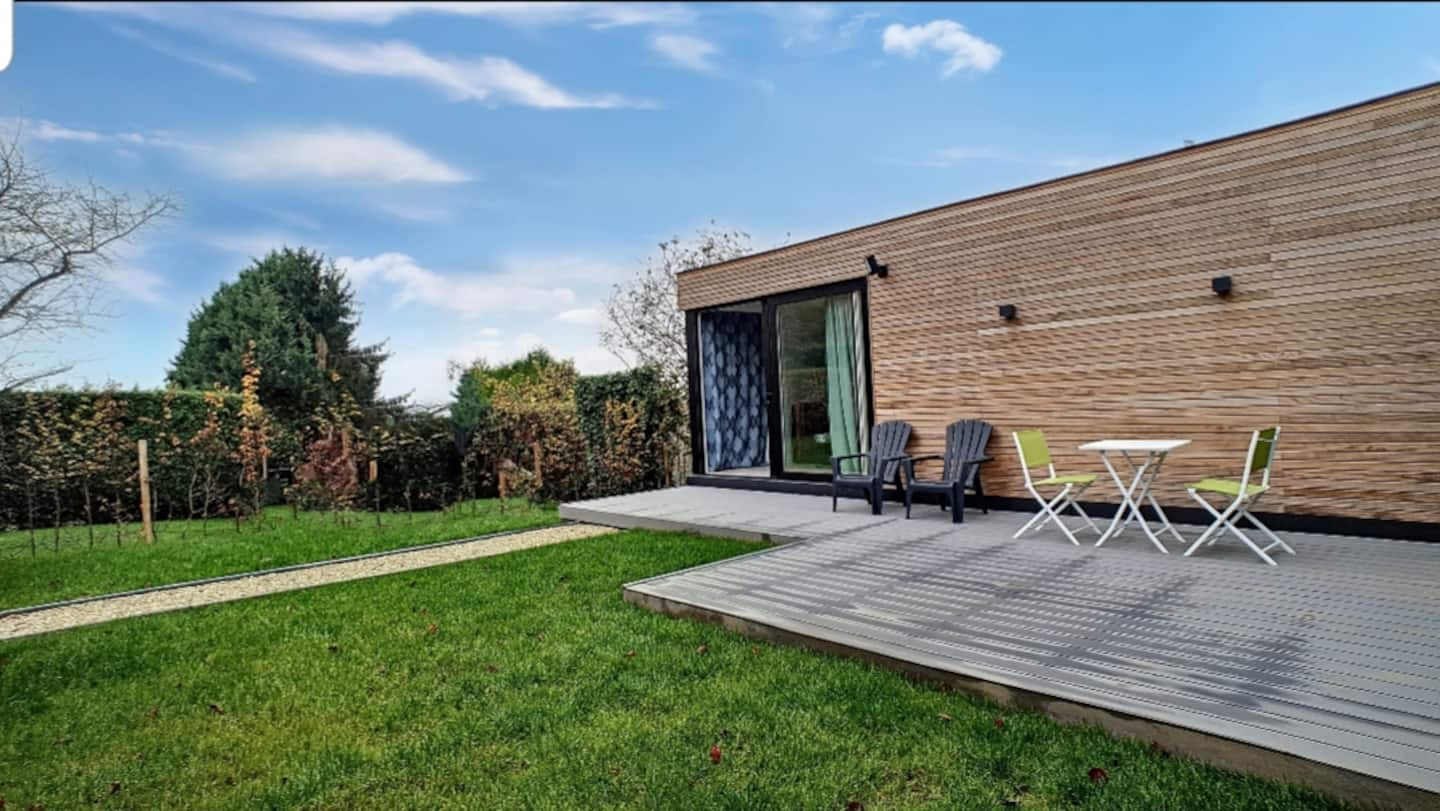

A project team arrives in Belgium on Monday. Work begins Tuesday. If the accommodation has no beds, kitchen equipment, internet connection, or active utilities, the housing arrangement has created another project to manage. That is the practical difference behind furnished leases versus unfurnished rentals for employers: the decision affects mobilization speed, total cost, employee comfort, and administrative workload.
For a company housing technicians, contractors, relocating employees, or site teams for one month or longer, the lowest advertised monthly rent is rarely the only figure that matters. The right option depends on the length of stay, team size, location, and how much operational responsibility the company is willing to take on.
Furnished Leases Versus Unfurnished Rentals for Teams
A furnished lease provides a property with the core items occupants need to live there immediately. For corporate accommodation, that generally means beds, seating, dining furniture, storage, an equipped kitchen, appliances, cookware, and often high-speed Wi-Fi and utilities. A team can arrive with personal belongings and begin using the property without arranging deliveries or opening multiple accounts.
An unfurnished rental typically provides the property itself, but not the furniture and household equipment required for daily life. The exact definition varies by landlord and local market. Some unfurnished homes may include a kitchen or major appliances, while others require the tenant to supply nearly everything beyond fixed fixtures. Companies must confirm what is included rather than assume that an apartment advertised as a rental is ready for occupancy.
For individual tenants staying for years, an unfurnished home can be a sensible long-term choice. They can select furniture, personalize the space, and spread setup costs over a long period. For an employer deploying a group for a defined assignment, those benefits often do not outweigh the time and cost of furnishing a temporary residence.
The Real Cost Is More Than Monthly Rent
Unfurnished rentals may appear cheaper at first because the base rent can be lower. That comparison becomes less useful once a company adds the costs of beds, mattresses, tables, chairs, cookware, appliances, linens, delivery, assembly, and eventual removal or resale. Even sourcing secondhand furniture requires staff time, transport, storage, and coordination.
There are also recurring expenses to manage. Utilities, internet service, municipal charges where applicable, and insurance may need separate arrangements. Each account can involve contracts, deposits, installation appointments, and final billing. For companies managing several properties or rotating teams, that administrative work can become significant.
A furnished corporate lease is often priced higher than an empty property because the provider carries the cost of furnishing, maintenance, and readiness. However, an all-inclusive monthly rate can create a more accurate budget for the actual assignment. When furniture, equipped kitchens, Wi-Fi, utilities, and company invoicing are included, procurement teams can assess one predictable accommodation cost rather than track a series of separate purchases and invoices.
The cost advantage is especially clear when several employees share one house or apartment. Instead of booking multiple hotel rooms and paying for meals out, a group can use shared living areas and prepare food in a functioning kitchen. That can improve cost control over weeks or months while giving workers more space and privacy.
Consider the full assignment period
The shorter the stay, the less attractive an unfurnished rental usually becomes. A two- or three-month project may not leave enough time to recover the cost and effort of furnishing a property. Even a six- or twelve-month deployment can favor furnished accommodation when the end date is uncertain or workers may be reassigned.
An unfurnished lease becomes more competitive when a company has a long-term local presence, expects stable occupancy for multiple years, and already owns furniture or has an established setup process. In that situation, the company may be willing to manage utilities and property logistics in exchange for greater control.
Speed of Occupancy Matters on Active Projects
Project schedules do not always allow for a gradual move-in. A new contract can require a team on site quickly, while a plant shutdown, construction phase, or technical installation may have a fixed start date. A furnished property reduces the gap between receiving keys and housing employees.
With an unfurnished rental, the company must coordinate several moving parts: property handover, furniture selection, deliveries, assembly, utility activation, internet installation, and basic household supplies. A delay in any one of these can leave employees in temporary hotel rooms or without workable accommodation.
A ready-to-live-in furnished lease removes much of that coordination. This is particularly useful for overseas employers that do not have local staff in Belgium to organize purchases, meet delivery crews, or solve setup problems. The property should still be checked for capacity, sleeping arrangements, parking, and proximity to the worksite, but the move-in process is far more direct.
Employee Comfort Supports Reliable Attendance
Accommodation is not only a lodging line item. It directly affects how well employees can rest, prepare for work, and sustain performance during a long assignment. A team returning from a demanding shift needs proper beds, a clean bathroom, a place to cook, reliable internet, and enough shared and private space to live comfortably.
Hotels can work for short visits, but they often become expensive and restrictive for extended group stays. Employees may have limited room to cook, store belongings, or spend time outside a single bedroom. A furnished house or apartment designed for group occupancy provides a more practical base for teams working away from home.
Unfurnished rentals can eventually offer the same level of comfort, but only after the company has completed the setup. If furniture choices are rushed or incomplete, the result can be poor sleeping arrangements, crowded common areas, and frustrated workers. For workforce housing, functional quality matters more than decorative style.
Capacity should match the actual team
Employers should compare accommodation based on usable sleeping capacity, not just the number of bedrooms. Confirm the number and type of beds, bathrooms, kitchen equipment, laundry facilities, parking, and communal areas. A property that works well for six employees may not work well for ten, even if the landlord permits the occupancy.
For teams of six to sixteen people, a shared furnished house can simplify supervision and transportation while keeping the group together. The best option depends on work schedules and privacy requirements. Night-shift teams, for example, may need a layout that limits disturbance between workers on different rotations.
Flexibility and Administration Often Decide the Choice
Traditional unfurnished residential leases may be built around long-term private occupancy. They can involve fixed terms, detailed tenant obligations, utility transfers, and a return condition requiring the property to be empty and restored at the end of the lease. These terms are not necessarily wrong, but they may not suit a project that changes scope or timing.
Corporate furnished accommodation is generally better aligned with temporary assignments. Companies can look for rental periods beginning at one month, options to extend when a project runs longer, and terms that accommodate workforce changes. Flexibility should be confirmed before signing, particularly regarding notice periods, extensions, deposits, occupancy changes, and early departure.
Administration should also be part of the comparison. A company invoice for housing services is easier for many finance teams to process than multiple receipts for furniture stores, utility providers, internet contracts, and hotel bookings. Centralized communication is equally valuable when a maintenance issue arises or occupancy needs to change.
Belga Promo provides fully furnished, fully equipped accommodation for professional teams in Belgium, with group-ready properties, included services, and a practical company invoicing process. For employers, this type of arrangement shifts housing from a collection of tasks into a managed operating cost.
How to Choose the Right Rental Model
Start with the expected duration, but do not stop there. Ask whether the end date is certain, whether the team may grow or rotate, and whether the company has local resources to furnish and manage a property. Then compare the complete cost of each option over the full assignment, including setup, utilities, transport, time, and end-of-lease obligations.
A furnished lease is usually the stronger choice when speed, predictable costs, immediate livability, and low administration are priorities. An unfurnished rental may fit a stable, long-term operation with existing local infrastructure and enough time to create a home from an empty space.
Before committing, request a clear inventory and written list of inclusions. Confirm occupancy capacity, kitchen equipment, Wi-Fi, utility arrangements, cleaning expectations, parking, payment terms, and the process for extending the stay. The best housing choice is the one that lets your employees focus on the work they were sent to do, not on setting up a temporary home.