
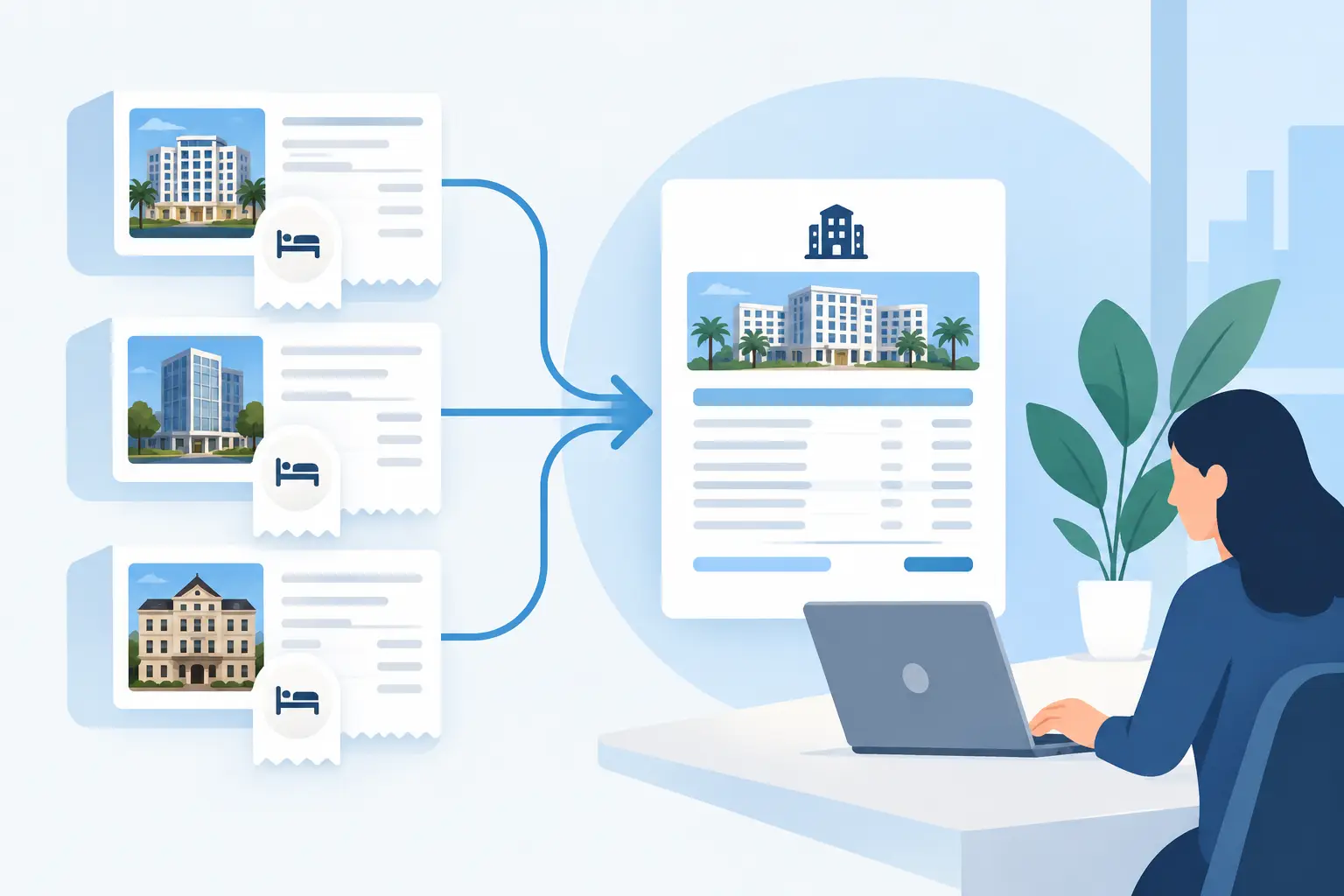
A project can have the right people on site and still lose time in the back office. One team may be split across several hotels, another may extend its stay, and invoices can arrive from multiple suppliers with different billing dates, taxes, and reference formats. When you consolidate lodging invoices for projects, you give finance, operations, and site management one clear view of accommodation spending.
For companies housing technicians, contractors, relocation staff, or larger work crews in Belgium, consolidated billing is more than an administrative preference. It supports better budget control, faster approvals, and fewer questions at month-end. The goal is simple: one accommodation process that matches the way your project is managed.
Why project lodging invoices become difficult to manage
Accommodation costs become complicated when bookings are made one stay at a time. A site manager may reserve hotel rooms for an urgent arrival. A procurement team may arrange apartments separately for a longer assignment. Workers may change locations, extend their contracts, or join the project at different dates.
Each decision may be reasonable on its own. Together, they create a trail of confirmations, invoices, credit notes, and expense claims that must be matched to the correct project, cost center, and approval owner.
The financial impact is not limited to the nightly rate. Teams also spend time checking whether breakfast, parking, Wi-Fi, utilities, cleaning, or local taxes were included. When several suppliers bill separately, it is harder to compare actual costs against the housing budget or identify unexpected charges before they become a problem.
For multi-week and multi-month assignments, scattered hotel invoices are especially inefficient. A project manager needs to know the total cost of keeping a team near the worksite, not just the price of individual rooms on individual dates.
What consolidated lodging billing should include
A consolidated invoice should make accommodation spending easy to verify without forcing your accounts payable team to reconstruct the stay. It should connect the commercial agreement, the occupants, the dates, and the project reference in a format your company can process.
At a minimum, agree on the billing structure before workers arrive. This usually includes the legal company name and billing address, purchase order number where required, project or site reference, cost center, agreed rental period, and the contact responsible for approval.
For project teams, the invoice should also clearly state what is included in the accommodation price. A furnished corporate housing arrangement can combine rent, furniture, equipped kitchen facilities, high-speed Wi-Fi, utilities, and company invoicing into one recurring charge. This makes the total cost more predictable than a collection of room rates and daily extras.
The right level of detail depends on your internal policy. Some companies need an invoice per project and per location. Others prefer one monthly invoice with a clear schedule showing each property, occupancy period, and allocated amount. Both approaches can work if the information is consistent and agreed in advance.
One invoice does not mean less visibility
Consolidation should reduce paperwork, not hide costs. Ask for a supporting statement when several teams, sites, or properties are involved. This can show the accommodation address, agreed occupancy, billing period, and any approved changes.
That supporting detail is useful for project managers and finance teams for different reasons. Operations can confirm that the housing matched the deployment plan. Finance can verify that the correct entity, project, and period have been billed. Procurement can compare the final spend with the agreed commercial terms.
A practical process to consolidate lodging invoices for projects
The best time to fix invoice complexity is before the first booking is confirmed. Start by treating workforce accommodation as a project requirement rather than a series of individual travel purchases.
First, estimate the team size, location, arrival dates, expected duration, and likely extensions. Exact headcount is not always available at the start of an industrial project, but a realistic range helps secure suitable group accommodation. Housing six to sixteen workers in a furnished house or apartment can be easier to administer than managing the same group across multiple hotel reservations.
Next, choose one supplier or a limited approved supplier group for each project location. Centralizing the supply base is usually the largest administrative improvement. It creates a single point of contact for availability, changes, contract terms, and billing questions.
Then, establish the invoice rules in writing. Confirm whether invoices will be issued monthly, at the end of the rental period, or according to another agreed schedule. Monthly invoicing is often practical for projects lasting several months because it keeps spending visible while avoiding a large number of smaller documents.
Finally, assign a clear approval route. The person requesting housing is not always the person authorized to approve payment. Identify the site contact who can confirm occupancy changes and the finance contact who validates invoice details. With that structure in place, changes can be documented before the invoice is issued.
Set project references that people can actually use
A purchase order number alone may not be enough. Projects often have separate phases, teams, locations, or client charge codes. If no one can tell which reference applies, accounts payable will need to ask questions every time a new invoice arrives.
Use a short, consistent reference format. For example, combine a project code, site name, and department or cost center. The same reference should appear in the housing request, booking confirmation, contract, invoice, and internal approval workflow.
Avoid relying only on the name of an individual worker. Workers can move between sites, shifts, or accommodations. A project reference remains useful even when the occupancy list changes.
When client billing is involved, ask early whether your customer needs a separate accommodation breakdown. It may be easier to receive one supplier invoice while maintaining an internal allocation report for onward billing. The supplier invoice stays simple, while your finance team retains the detail needed for cost recovery.
Manage changes before they become invoice disputes
Project housing rarely stays static. A start date moves, a team grows, or a contractor finishes early. Consolidated invoicing works well only when changes are communicated through a defined process.
Set one operational contact who can notify the accommodation provider of arrivals, departures, extensions, and changes in occupant numbers. This prevents different supervisors from sending conflicting instructions. It also creates a record of what was requested and when.
The commercial terms matter here. Flexible contracts can reduce the risk of paying for unused rooms or having to find new housing at short notice. However, flexibility is not the same as unlimited cancellation. Notice periods, minimum rental durations, and availability conditions should be understood before the project begins.
For longer stays, schedule a regular occupancy review. A short monthly check between the site manager and housing provider can confirm who is staying, whether additional capacity is needed, and whether the next invoice should be adjusted. This takes far less time than resolving a disputed bill after payment is due.
Compare total accommodation cost, not just the invoice count
A single invoice is helpful, but the accommodation model must also make commercial sense. Hotels may be appropriate for short visits, individual travelers, or uncertain schedules. They can become costly and harder to manage when a full team needs to stay for a month or longer.
Corporate housing is often better suited to extended assignments because the team has space to live, cook, rest, and maintain a normal routine outside work hours. The all-inclusive structure also makes budgeting easier when utilities, internet, furniture, and equipped kitchens are included in the agreed rate.
That does not mean every project should use the same arrangement. A small two-week inspection job has different needs from a six-month construction deployment. The practical question is whether the housing solution gives your company predictable total cost, suitable capacity, and a billing format that fits your controls.
Belga Promo supports this type of planning with furnished group accommodation in Belgium for teams requiring ready-to-live-in housing from one month onward. For companies, the value is not only the property itself. It is having a defined accommodation arrangement that can be priced, approved, and invoiced as part of the project plan.
The result: cleaner accounting and better site support
When lodging is managed through one structured arrangement, the benefits reach beyond accounts payable. Site managers spend less time chasing bookings. Workers arrive to accommodation that is ready for the assignment. Finance receives fewer documents and can allocate costs with greater confidence.
The most useful next step is to review your current project housing process before the next team mobilizes. Identify how many suppliers, invoices, approval steps, and manual corrections are involved. If the answer is more than your team can comfortably manage, consolidating accommodation and billing will give the project a stronger operational foundation from day one.