A site is ready, subcontractors are confirmed, and the start date is fixed. Then the practical question lands on your desk: comment loger une équipe chantier without blowing the budget, losing time on admin, or placing workers too far from the jobsite.
For operations managers, HR teams, and project leads, housing is not a side issue. It affects punctuality, fatigue, team coordination, and overall project cost. The right setup keeps a crew operational from day one. The wrong one creates daily transport problems, fragmented invoices, and avoidable complaints from workers who are expected to stay productive for weeks or months.
What matters most when asking comment loger une équipe chantier
The first mistake is treating crew housing like standard business travel. A construction team does not have the same needs as one executive on a two-night trip. A jobsite crew needs practical, durable, ready-to-use accommodation that works for shared living and early starts.
Location usually comes first. If the property is too far from the site, transport costs rise and schedules become harder to manage. A cheaper nightly rate can quickly become more expensive when you add fuel, lost time, parking, or the need for extra vehicles. Proximity is not just a convenience. It is part of operational control.
Capacity matters just as much. Booking six or eight separate hotel rooms may seem simple at the start, but it becomes inefficient on longer assignments. Teams are split across floors or even across different properties. Coordination suffers, and administration becomes heavier. Housing designed for group occupancy is often a better fit because it keeps people together while reducing the number of bookings to manage.
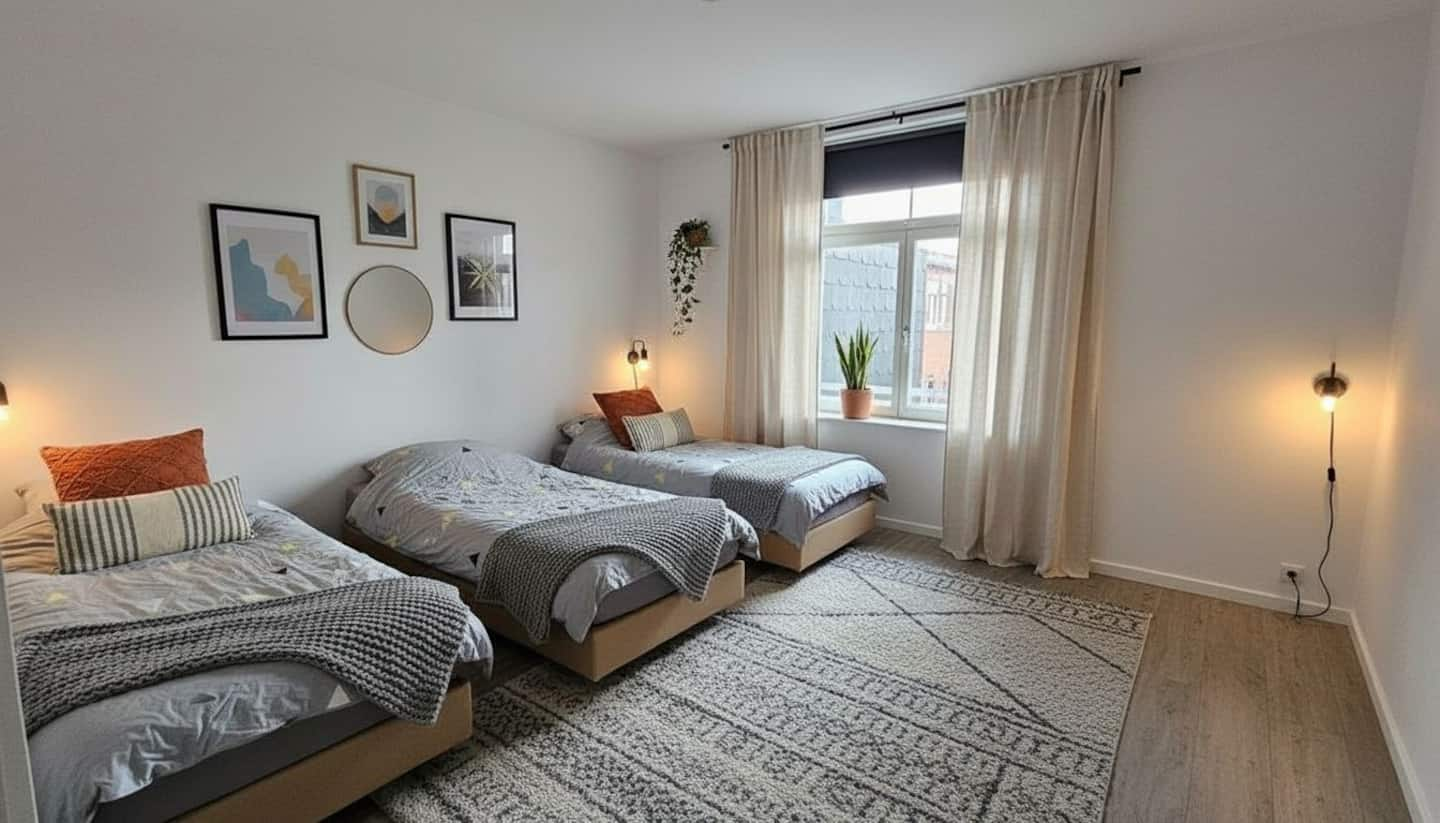
Comfort is another practical issue, not a luxury. When workers stay for several weeks, they need more than a bed. They need equipped kitchens, reliable Wi-Fi, furnished common areas, and enough space to live normally outside working hours. That helps morale, but it also reduces spending on restaurants and lowers the friction that comes with long stays.
Hotels, short stays, and crew housing are not the same thing
Hotels can work for very short assignments, urgent one-night stops, or small teams in transit. They are less effective when a crew stays for a month or longer. Costs accumulate quickly, meal expenses remain high, and room-by-room billing creates unnecessary paperwork.
A furnished house or apartment built for company stays solves a different problem. It gives the team immediate occupancy, shared living space, and predictable monthly costs. Utilities, furniture, internet, and equipped kitchens are already in place, so there is no need to organize setup. For employers, that means less coordination and fewer hidden costs.
There is also a compliance and duty-of-care angle. When teams are placed in accommodation that is clearly intended for professional occupancy, with enough capacity and practical amenities, the employer has more control over standards. That is harder to guarantee when bookings are scattered across low-cost options that were not designed for workforce housing.
How to evaluate the right housing option
If you are deciding how to house a work crew, start with the assignment itself. Duration changes everything. A two-week installation project does not require the same structure as a six-month industrial contract. The longer the stay, the more valuable a turnkey furnished rental becomes.
Headcount is the next filter. You need to know not just how many people are coming, but how that number may change. Some projects begin with four technicians and expand to ten once the next phase starts. Flexible group accommodation is useful because it supports scaling without forcing a full rebooking process.
Then look at the daily rhythm of the team. Early departures, shift work, and rotating staff all affect what kind of housing is practical. A crew on staggered schedules will benefit from enough bedrooms, functional bathrooms, and common areas that reduce pressure during peak hours. This is where cheap accommodation often fails. It may look acceptable on paper, but it does not hold up under real shared use.
Administrative simplicity should also be part of the evaluation. If your team has to handle multiple reservations, deposits, utility transfers, and separate receipts, the labor cost inside your company increases. One contract and one company invoice can be more valuable than a slightly lower advertised rate.
The cost question: cheaper than hotels is only part of the story
Most companies begin with price, and that is fair. Housing a crew is a budget item. But the useful comparison is total operational cost, not just nightly price.
Hotels often come with extra meal spending, laundry costs, parking fees, and fragmented invoicing. Workers also have limited space, which matters on longer stays. In a furnished group property, the monthly rate is easier to forecast because the major needs are bundled. Furniture, utilities, internet, and kitchen equipment are already included.
That predictability helps procurement and finance teams. It is easier to assign the cost to a project, monitor budget drift, and avoid surprise charges at the end of the month. For companies running several sites at once, this is not a minor advantage. It is a planning tool.
There is also a productivity angle. When crews are lodged close to the site in accommodation that supports normal daily routines, lateness drops, fatigue is lower, and the team is easier to mobilize. These are indirect savings, but they are real.
What good crew accommodation should include
When companies ask comment loger une équipe chantier, they often focus on the building itself. The better question is whether the accommodation is ready for immediate use by a professional team.
At minimum, it should be fully furnished and fully equipped. That means beds, seating, tables, storage, kitchen appliances, cookware, and internet access that works from the first day. Utilities should already be active. If a crew arrives after a long travel day, they should be able to move in without waiting for installations or chasing keys across town.
The layout matters too. Group occupancy works best when the property has enough separation for rest but still offers shared areas for meals and downtime. This balance is important. Too little privacy leads to tension. Too much fragmentation makes the accommodation feel like a collection of improvised beds rather than a stable base for the team.
Contract flexibility is another deciding factor. Construction planning changes. Extensions happen. Timelines slip. Good workforce housing should allow companies to adapt the rental period without starting from zero each time.
Why turnkey housing fits construction and technical teams
For project-based businesses, speed matters almost as much as price. A team may need to be housed next week, not next month. That is why turnkey furnished rentals are often the most practical solution. They remove the setup phase and reduce the number of decisions your internal team has to make.
This model is particularly relevant in Belgium, where many companies deploy technicians, contractors, and site crews across regions for medium-term assignments. Providers such as Belga Promo focus on this exact need by offering furnished houses and apartments for groups, with practical capacities, inclusive services, and company billing. That kind of setup is not designed for tourism. It is designed to keep a workforce operational.
For employers, the value is simple. The team arrives, settles in quickly, and can focus on the job. Procurement gets clear costs. HR avoids repeated booking issues. Site managers spend less time solving housing problems that should already be solved.
Common mistakes to avoid
The biggest mistake is waiting too long. Once a project is confirmed, accommodation should be treated as an operational priority. Last-minute booking usually means fewer options, worse locations, and higher costs.
Another mistake is choosing based only on rate. A low monthly price can hide a poor location, missing equipment, weak internet, or a layout that does not work for shared living. These problems show up after move-in, when changing accommodation is disruptive and expensive.
Finally, avoid underestimating the value of one accountable provider. When housing is bundled into a single offer with clear terms, response times are better and administration is easier. That reliability matters more than many companies expect.
A work crew does not need luxury. It needs practical housing that supports the job, controls cost, and reduces friction for everyone involved. If the accommodation is close, ready, comfortable, and easy to manage, the project starts on stronger footing.