
A delayed housing decision can affect a project before the first shift begins. When technicians, contractors, or installation teams arrive without suitable accommodation, site managers lose time to late check-ins, long commutes, transport issues, and repeated employee questions. Effective accommodation planning for site managers prevents these avoidable problems by treating workforce housing as an operational requirement, not a last-minute travel booking.
For projects in Belgium, the right accommodation gives teams a practical base close to the worksite, with the space and facilities needed for stays that last weeks or months. The goal is straightforward: get people settled quickly, keep costs predictable, and avoid creating extra work for the site team.
Start accommodation planning before deployment is confirmed
Housing is often arranged after staffing numbers, project timing, and supplier schedules are already set. That approach can work for a small, short assignment, but it creates risk when several workers need to arrive at the same time or when the stay may be extended.
Start by defining the expected deployment window, including a realistic buffer before mobilization and after handover. A project scheduled for eight weeks may require accommodation for ten or twelve if commissioning, inspections, weather, material delays, or client changes affect the timeline. Flexible rental terms matter because moving a team halfway through an assignment is disruptive and usually more expensive than extending an existing stay.
Confirm the number of occupants, their work patterns, and whether the group will change during the project. A stable team of eight has different needs from a rotating workforce where four people leave each Friday and another four arrive on Monday. The accommodation provider should understand the occupancy pattern from the beginning so capacity, beds, parking, and invoicing can be planned correctly.
Choose a location based on daily operations
The lowest nightly rate is not always the lowest project cost. A property farther from the site may look attractive on paper, but long travel times can reduce punctuality, increase fuel costs, complicate shift changes, and leave workers with less time to rest.
For site managers, location should be assessed against the actual working day. Consider the route to the site at shift start, expected traffic conditions, access to major roads, available parking for vans or company vehicles, and nearby essentials such as supermarkets, pharmacies, and fuel stations. A practical location makes the team more self-sufficient and reduces the number of minor issues that reach the site office.
It also helps to consider the nature of the assignment. Workers on a construction, industrial, maintenance, or technical installation project may need early access to transport routes. A team working extended shifts may benefit more from a quiet residential setting near the site than from a central hotel location with limited space and parking.
Keep travel time realistic
Ask for the estimated door-to-site travel time during the hours your team will actually travel. Midday travel estimates can be misleading when crews begin before rush hour or finish when traffic is building. If the project involves several locations, choose housing that supports the main worksite while keeping secondary travel manageable.
Plan for group living, not individual hotel stays
Hotel rooms are familiar, but they are not always suitable for professional teams staying for a month or longer. Multiple room bookings create separate reservations, changing availability, individual meal arrangements, and more receipts to reconcile. They can also separate a team across different floors or even different properties.
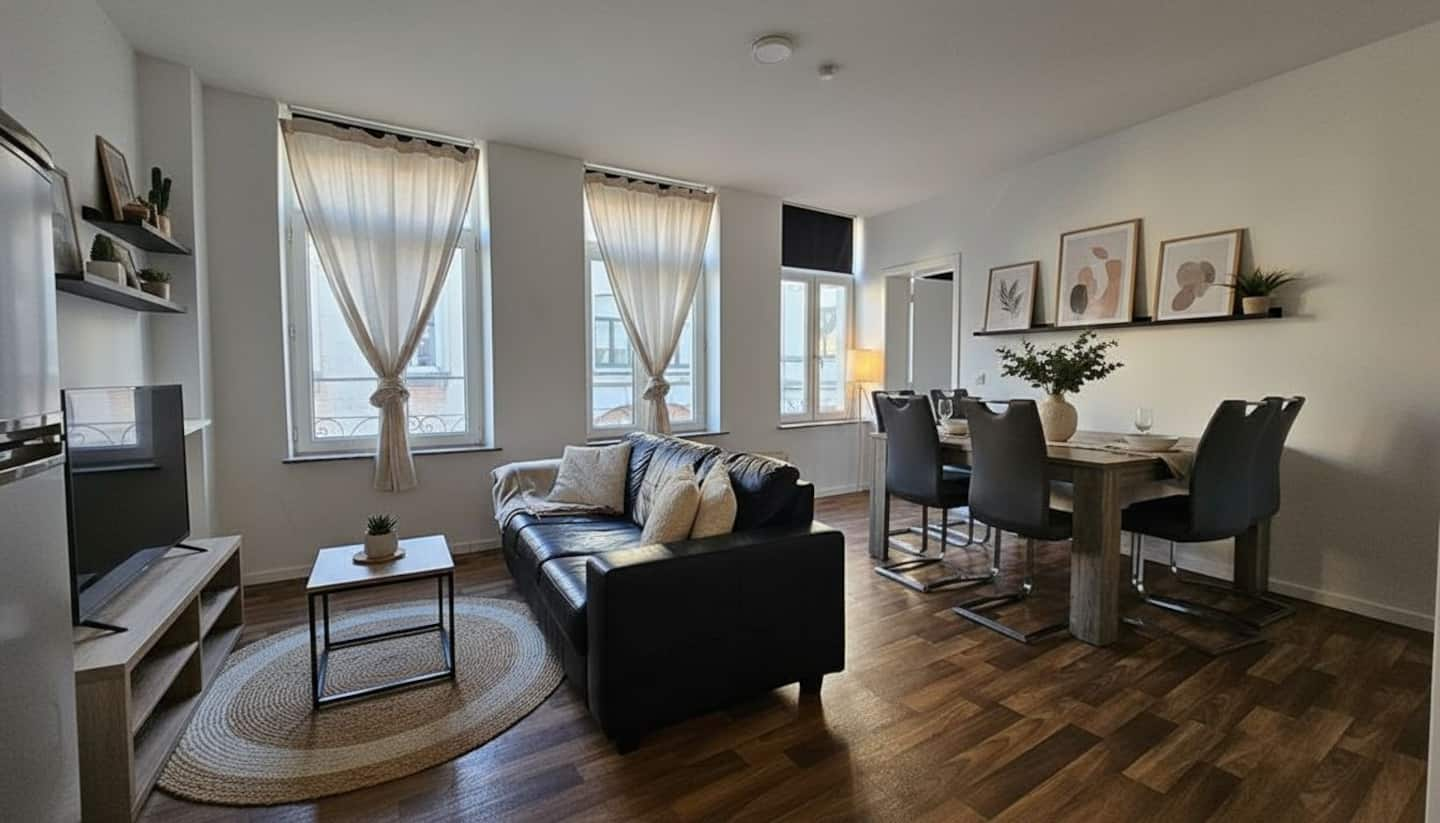
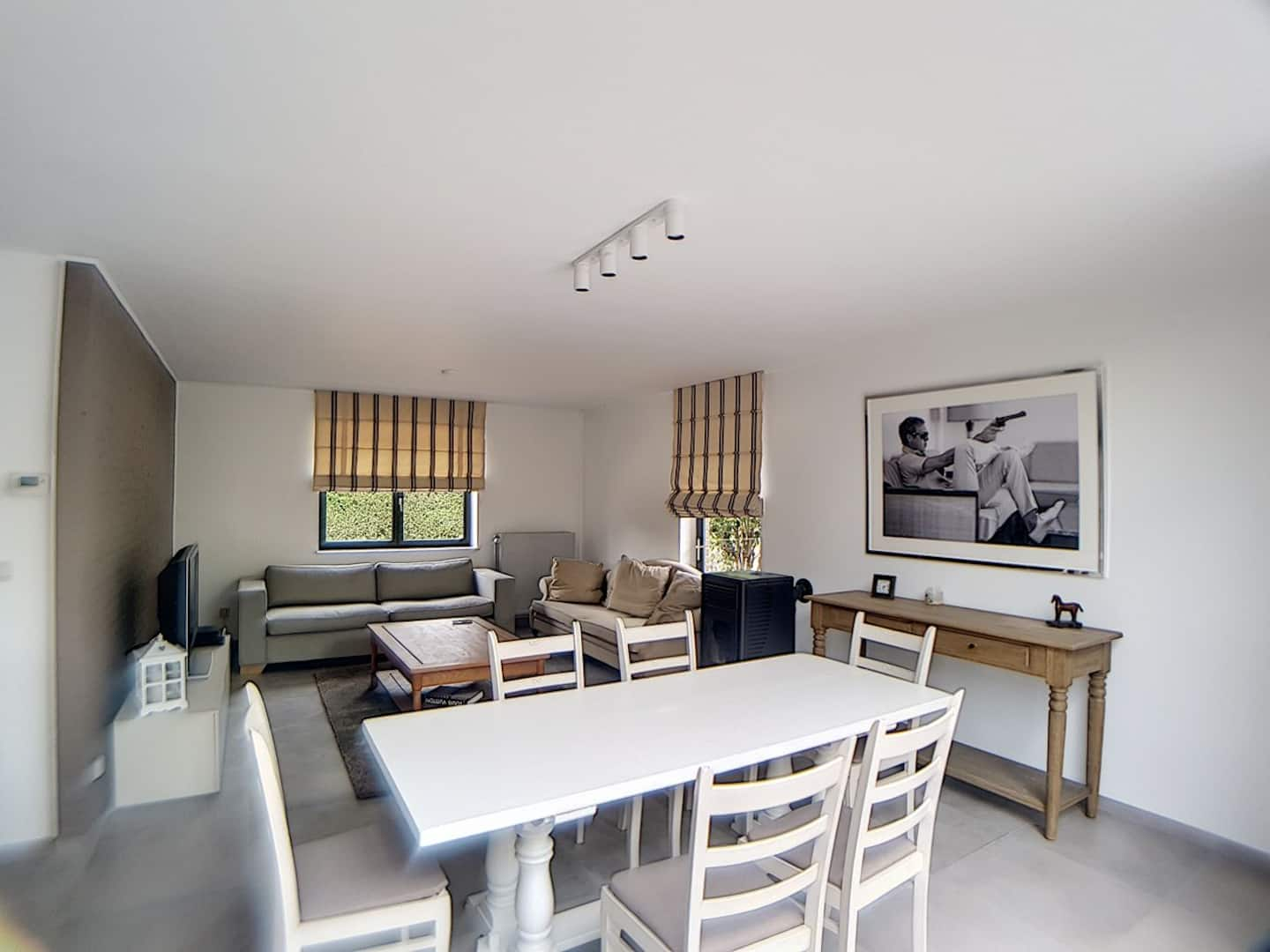
A furnished house or apartment designed for group occupancy gives workers a more practical setup. Shared living areas allow colleagues to eat, prepare for the next day, and spend downtime outside a bedroom. Equipped kitchens reduce dependence on restaurants, which can make a meaningful difference to both employee comfort and daily expenses over a long assignment.
Accommodation should still provide personal space. The right balance depends on the group, the duration of the stay, and company policy. Some teams prioritize maximum capacity and cost control. Others require additional bedrooms or bathrooms to support privacy, sleep quality, and different shift schedules. Neither approach is automatically right. The key is to match the property to the working conditions rather than choosing solely by headcount.
Check the operational basics before booking
Before confirming a property, establish exactly what is included. For medium-term workforce housing, the essentials are furnished bedrooms, beds sized appropriately for adults, equipped kitchens, laundry facilities or a practical laundry solution, high-speed Wi-Fi, heating, utilities, and sufficient bathrooms for the group.
Parking deserves specific attention. A house that accommodates ten people but has limited off-street or nearby parking may not suit a team arriving in several vehicles. The same applies to Wi-Fi. It is no longer an optional extra when workers need to communicate with family, complete online training, submit reports, or stay in contact with supervisors.
Build a budget around the total stay cost
Accommodation budgets can become unreliable when costs are split across room rates, utility charges, Wi-Fi, local taxes, deposits, cleaning, parking, and meal expenses. Site managers need a figure that is usable for project control, not an initial rate that rises after the booking is approved.
An all-inclusive corporate housing arrangement makes comparison easier. Instead of tracking several hotel reservations and separate household bills, the company receives a clear invoice for a ready-to-live-in property. This reduces administrative work for the site manager, procurement team, and finance department.
When reviewing costs, calculate the price per person for the full expected duration, not only the weekly or nightly headline rate. Then compare it with the total cost of individual hotel rooms, eating out, transport, and the time spent managing changes. For groups of six to sixteen people, a shared furnished property can offer substantially better value, particularly for assignments lasting more than a few weeks.
Make flexibility part of the agreement
Project schedules change. The client may extend the work, a subcontractor may arrive later than planned, or staffing may increase after the first phase. Accommodation planning should allow for these possibilities without forcing the company into a rigid arrangement that no longer fits the project.
Ask early how extensions are handled, whether capacity can be adjusted, and what notice is required if the end date changes. Availability can be tight in active industrial areas or during major construction periods, so a provider that can respond quickly is valuable when deployment dates move.
Flexible contracts do not mean that every change is free or guaranteed. They mean the provider has a business model suited to professional stays and can discuss practical options when conditions change. Clear communication is essential: provide anticipated dates, team numbers, and likely changes as soon as they are known.
Reduce administration with one accountable provider
A site manager should not have to become a travel coordinator. Housing arrangements work best when one provider can confirm availability, explain what is included, organize the contract, and issue company invoices that align with the project file.
For international teams, responsive communication is equally useful. Workers and supervisors may need information in different languages, especially when arrival times, access instructions, or property rules need to be confirmed quickly. A direct contact person reduces confusion and helps resolve issues before they interrupt the workday.
Belga Promo provides furnished, equipped houses and apartments in Belgium for professional teams, with capacities from 6 to 16 people and rental periods starting from one month. The focus is practical: a ready-to-live-in base with furniture, kitchens, Wi-Fi, utilities, and business invoicing arranged in one operational offer.
Use a simple pre-arrival process
Once the property is confirmed, give the team a short, clear arrival brief. It should cover the property address, check-in timing, parking arrangements, house rules, Wi-Fi access, emergency contacts, and who should report maintenance concerns. Keep one company representative responsible for communicating with the accommodation provider so requests are organized and duplicated messages are avoided.
It is also wise to inspect the accommodation requirements from the project side. Confirm how many workers are arriving on day one, whether anyone has specific mobility or accessibility needs, and whether the team needs secure storage for work equipment. Not every property will suit every assignment, and raising these points before arrival is far easier than solving them after the team is on site.
Good accommodation does more than give workers a place to sleep. It protects attendance, supports rest, simplifies budgeting, and gives the project a stable base from the first working day. When the next deployment is taking shape, secure the housing early enough that your team can focus on the work they were sent to do.