
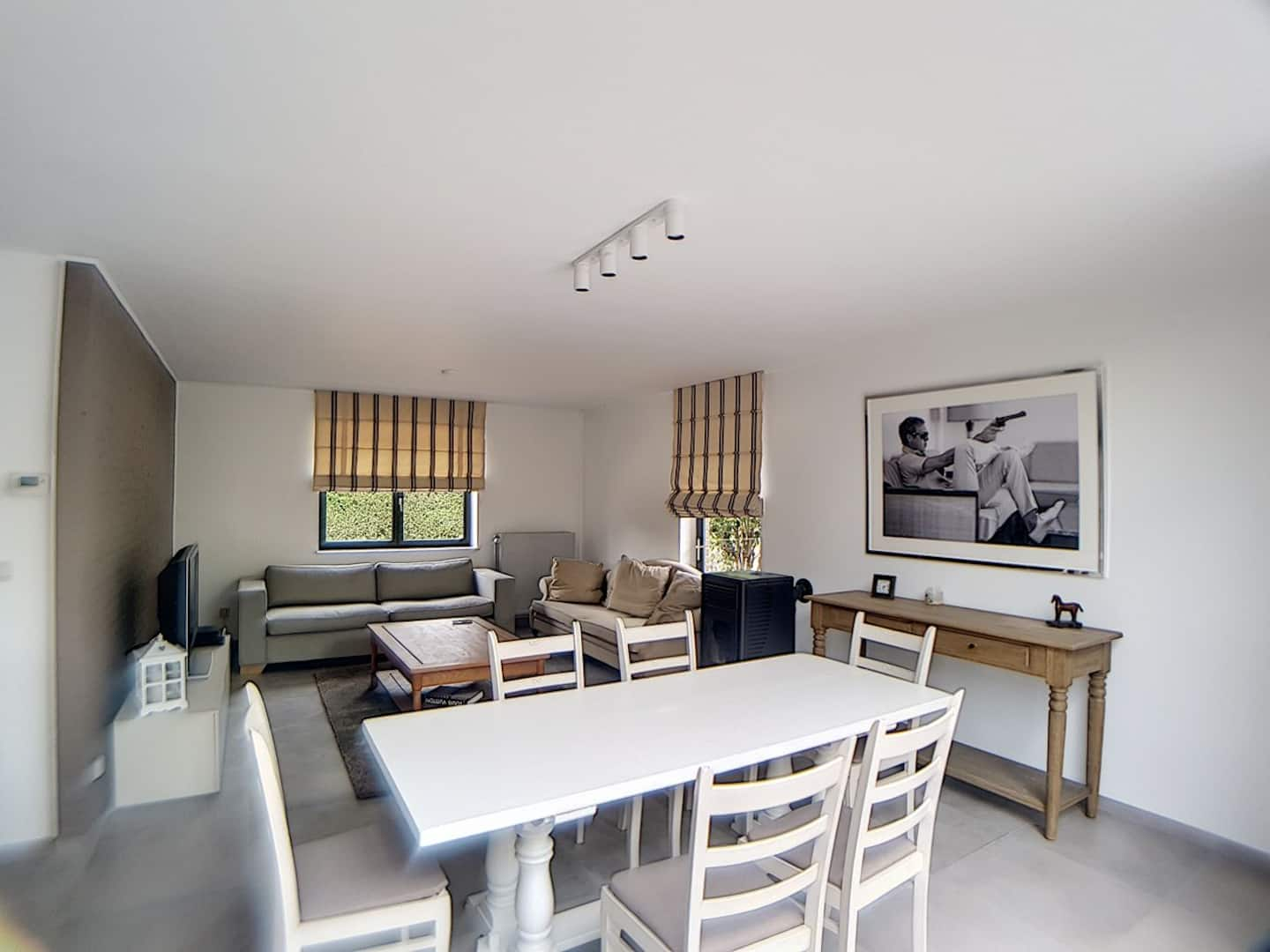
Companies choose group staff accommodation because it houses a whole team in one furnished, ready-to-live-in property under a single contract, a single invoice and a predictable monthly cost. Instead of juggling separate hotel rooms, short-term rentals and expense claims, you manage one address where your people can cook, rest, work and travel to site together.
For assignments running from one month to a year or more, this usually means better cost control, less administration and more comfortable workers than individual bookings. It is not right for every situation, so below you will find the main benefits, a comparison with hotel rooms, realistic scenarios where it fits, and a checklist to use before you commit to a property in Belgium.
What group staff accommodation actually means
Group staff accommodation is a furnished house or apartment rented by a company to lodge several employees, technicians or contractors at once. Each person typically has a bedroom, sometimes shared on larger properties, while the kitchen, living room, laundry and outdoor spaces are shared.
What separates it from a standard rental is the setup. A professional group property is delivered ready to move into: beds, linen, kitchen equipment, Wi-Fi and utilities are already in place. Your team arrives with a suitcase and starts working the next morning. No one has to open energy contracts, buy pots and pans or wait for an internet installation.
It is also built around business terms. Contracts run by the month, the company is invoiced directly, and the stay length matches the project rather than a standard residential lease.
Five reasons companies choose group housing
1. A predictable, fixed budget
With individual hotel rooms, costs move every night: rates change with season and demand, meals are bought outside, and extras pile up on expense reports. A group house usually comes with one agreed monthly amount covering the property, furniture, utilities and internet. Finance teams can forecast the full assignment from day one. If you want to go deeper into this trade-off, our article on fixed rent versus variable lodging costs walks through how to compare both models.
2. Less administration
Ten workers in ten rooms can mean ten bookings, ten check-ins and a stack of receipts to reconcile. One property means one contract, one point of contact and one invoice in the company's name. For procurement and accounting, that reduction in paperwork is often as valuable as any saving on the rate itself. See how other teams approach this in how to consolidate lodging invoices for projects.
3. Space to live, not just sleep
A hotel room works for three nights. After three weeks, workers want a proper kitchen, a table to eat at, a washing machine and somewhere to relax that is not their bed. Group housing gives them a normal home routine: cooking their own food, doing laundry, calling family from a quiet room. That everyday comfort supports rest, which matters for people doing physical or safety-critical work.
4. Easier coordination
When a team lives under one roof, morning departures, carpooling to site and last-minute briefings become simple. Site managers know where everyone is. New arrivals settle in faster because colleagues are around to show them the area. For crews that work shifts or long days, having everyone in one place removes a lot of small daily friction.
5. Flexibility as the project changes
Projects slip, scopes grow and teams rotate. Monthly contracts let you extend when a project runs long, and a property with spare capacity absorbs an extra technician without a new booking. Working with a provider that offers several properties also lets you add a second house if the team grows.
Group housing vs hotel rooms at a glance
The right choice depends on stay length and team size. This comparison summarises the typical differences for a team staying several weeks or more.
| Criterion | Group staff accommodation | Individual hotel rooms |
|---|---|---|
| Best suited to | Stays of 1 month to 12+ months | Short stays of a few nights |
| Cost structure | Fixed monthly amount for the team | Per room, per night, plus extras |
| Kitchen and laundry | Fully equipped, shared | Usually none or limited |
| Administration | One contract, one invoice | Multiple bookings and receipts |
| Team coordination | Everyone at one address | Spread across rooms or hotels |
| Living space | Bedrooms plus shared living areas | Bedroom only |
For a more detailed breakdown, read crew housing versus hotel blocks for teams.
When group accommodation is the right fit
Group housing is most useful when a team of several people needs to stay in the same area for weeks or months. A few realistic scenarios:
- Industrial maintenance or shutdown. A crew of eight technicians arrives for a planned shutdown in the Feluy industrial zone, expected to last two months. One house near the site keeps them together and close to work.
- Installation or construction project. A foreign contractor sends a team to install equipment near Charleroi. The project timeline is uncertain, so a monthly contract with the option to extend avoids rebooking every few weeks.
- Relocation of a small department. A company moves several staff to the Brussels area while they search for permanent housing. A furnished house in Waterloo or Beersel gives them a comfortable base for the first months.
- Rotating teams. Workers rotate every few weeks, but the company needs a stable base. Keeping the same property means each new rotation walks into a home that is already set up.
- Large teams. When you need to house a dozen people or more, a single large property is often simpler than securing many separate rooms. Our guide to housing for sixteen employees in Belgium covers that case in detail.
It is usually not the best fit for a one-off visit of two or three nights, for a single executive who needs hotel-style services, or when team members work at sites far apart from each other.
Checklist: what to verify before you book
Not every shared house is suitable for a working team. Before signing, go through these points with the provider:
- Capacity and bed layout. Count bedrooms and beds, and check whether rooms are single or shared. Make sure the layout suits your team, not just the maximum headcount.
- Bathrooms. For larger groups, the number of bathrooms and toilets matters as much as bedrooms, especially when everyone leaves at the same time in the morning.
- Location and travel time. Check realistic travel time to the site at the hours your team actually commutes. Properties within reach of the main motorways around Brussels, Mons and Charleroi help here.
- Parking. If the team drives vans or company cars, confirm how many vehicles can park safely. Our article on crew accommodation with parking explains what to ask.
- What is included. Ask for a written list: furniture, bedding, kitchen equipment, washing machine, Wi-Fi, energy and water. Clarify anything that is not included, so there are no surprises.
- Internet quality. If staff need to file reports, join video calls or rest with streaming after a shift, reliable high-speed Wi-Fi is essential.
- Contract terms. Check the minimum duration, notice conditions and how extensions work if the project runs longer.
- Invoicing. Confirm that the invoice can be issued to your company with the details your accounting team requires.
- Lead time. Ask how quickly the property can be ready and how the check-in works, particularly for teams arriving from abroad.
The providers worth working with will answer each of these clearly and in writing. At Belgapromo, for example, the list of what comes with each property is published openly on our page about what is included in our housing.
Making shared living work for your team
The property is only half of the equation. A few simple measures help a group house run smoothly for months:
Plan room allocation before arrival
Decide who sleeps where before the team lands. Consider seniority, shift patterns and who already knows each other. Putting night-shift workers in quieter rooms, for example, avoids friction from day one.
Agree on basic house rules
A short, practical set of rules covering quiet hours, shared kitchen use, waste sorting and keeping common areas tidy prevents most disagreements. Belgian municipalities have their own waste collection schedules, so make sure someone on the team knows the collection days.
Appoint a house contact
Name one person in the team as the point of contact for the provider. They report any issue, receive information and pass messages on. This keeps communication clear and avoids repeated requests from several people.
Check in after the first week
Ask the team how the house is working: commute, sleep, internet, kitchen. Small adjustments early on are easier than complaints after two months.
Handled this way, group staff accommodation becomes a stable base that supports the project rather than another thing for managers to worry about.
Check availability for your team
If you are planning an assignment in Belgium and want to house your team together, start by matching your headcount and dates to a suitable property. Belgapromo offers fully furnished, fully equipped houses and apartments for 2 to 16 people in Nivelles, Feluy, Waterloo, Beersel and Lodelinsart (Charleroi), with monthly contracts and company invoicing.
Browse our furnished properties with live availability, or request a quote with your team size, location and dates. We reply in French, Dutch, English or Spanish, and you can also reach us on WhatsApp at +32 495 300 771.