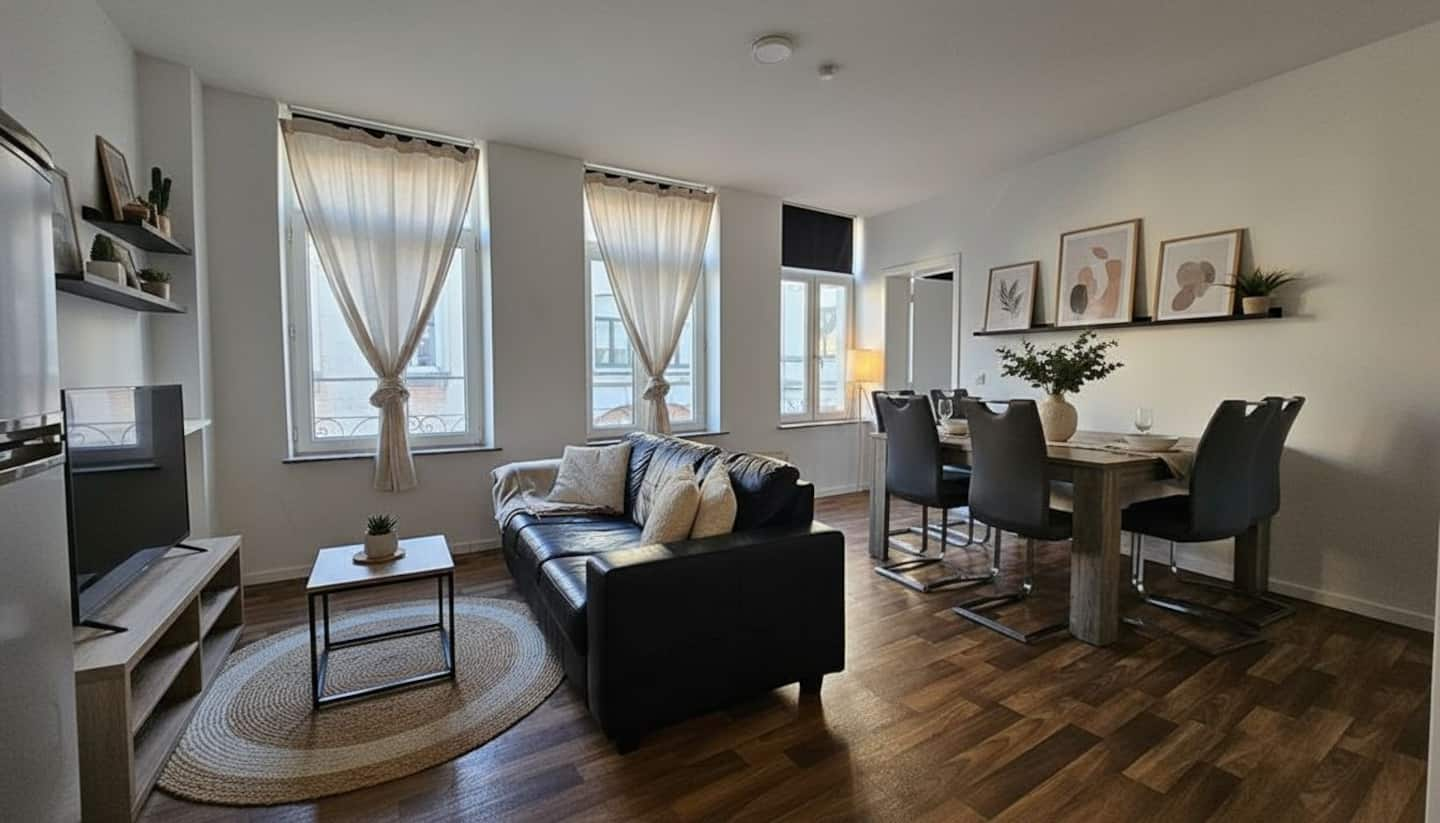
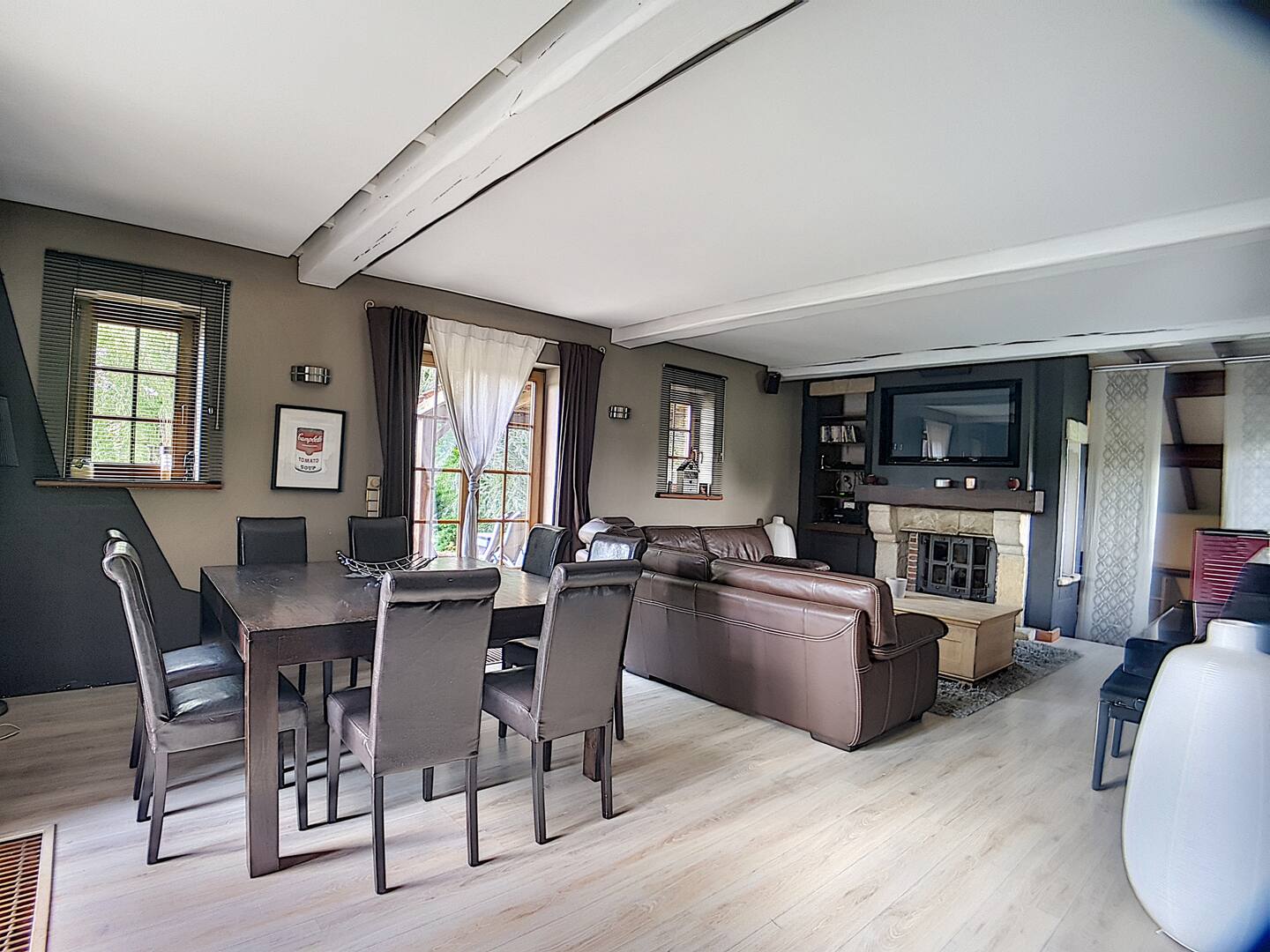
Housing sixteen employees works best when you treat it as one coordinated operation rather than sixteen separate bookings. For most companies in Belgium, the practical choice is either one large, fully furnished house designed for group occupancy or a small cluster of furnished properties close together, rented on a monthly contract with a single company invoice.
The right answer depends on four things: how long the team stays, whether they work the same shifts, how many vehicles they bring and how much privacy each person needs. This guide walks through those decisions, gives you a checklist for a 16-person property and shows how to keep budgets and administration under control.
One large house or several properties?
A team of sixteen sits at the upper end of what a single residential property can comfortably handle. That makes the first decision the most important one.
Option 1: a single house for the whole team
One address means one handover, one set of keys to manage, one contract and one invoice. Team leaders can brief everyone in the living room in the evening, carpooling is easy to organise and nobody feels isolated. For crews working the same shift pattern on the same site, this is usually the most efficient set-up.
The trade-off is density. Sixteen people under one roof need a well-planned layout: enough bathrooms, a kitchen that can handle several people cooking at once and common areas that do not turn into a bottleneck at 6 a.m.
Option 2: split the team across two or more properties
Splitting works well when the team is mixed: supervisors and operators, day and night shifts, or different subcontractors who prefer to keep some distance. Two houses of eight, or a house plus an apartment, can reduce friction while staying manageable, especially if both properties come from the same provider and are billed together.
Option 3: hotel rooms
Sixteen individual rooms give maximum privacy, but costs scale per person and per night, there is no kitchen, and the team is scattered across corridors. For stays of a month or more, most companies find this the least practical route. Our comparison of group apartments versus multiple hotel rooms looks at that trade-off in more detail.
| Criterion | One 16-person house | Two or more properties | Sixteen hotel rooms |
|---|---|---|---|
| Coordination | Simplest | Moderate | Complex |
| Privacy | Shared spaces | Better separation | Highest |
| Cooking facilities | One large kitchen | Several kitchens | Usually none |
| Shift compatibility | Best for same shifts | Good for mixed shifts | Good |
| Invoicing | Single contract | Can be consolidated | Often fragmented |
| Budget predictability | Fixed monthly rent | Fixed monthly rent | Varies by night and season |
Checklist: what a property for 16 people must have
A house can advertise sixteen beds and still fail a working team. Before you commit, check the following points, ideally with photos and a floor plan.
- Bed configuration. Count beds, not just bedrooms. Clarify how many people share each room, whether beds are singles or doubles, and whether supervisors can have a private room if needed.
- Bathrooms and toilets. With sixteen people leaving for the same shift, the morning queue is the first thing that breaks. More showers and separate toilets make a real difference.
- Kitchen capacity. Look for multiple cooking zones, enough fridge and freezer space for sixteen people's groceries, a dishwasher and sufficient crockery and cookware for the full team.
- Dining and living space. Can everyone sit down to eat, even in two shifts? A cramped living room quickly affects morale on a long assignment.
- Laundry. Work clothes get dirty fast. A washing machine and drying space, sized for the group, are essential.
- Wi-Fi that handles the load. Sixteen people video-calling family, streaming and handling work email in the evening need high-speed internet, not a basic connection.
- Parking. A team of sixteen might arrive in four vans or eight cars. Confirm the number of spaces and whether vans fit. Our guide to crew accommodation with parking covers what to ask.
- Storage. Space for suitcases, boots, safety gear and personal tools keeps bedrooms usable.
- Utilities included. Electricity, heating and water bundled in the rent prevents surprise bills and endless meter discussions.
If you want to see how an all-inclusive package is typically structured, you can review what is included in our housing.
Choosing the right location for a 16-person team
With a large group, travel time is multiplied. Twenty extra minutes each way is not a detail when sixteen people do it every working day.
Start from the work site, not the property
Map the job site first, then look for housing within a realistic daily commute. Consider:
- Shift start times. Early starts favour housing close to the site, even if the town itself is quiet.
- Vehicle availability. If the team shares a few vans, everyone should live at the same address or very close by.
- Access to shops. A supermarket within a short drive matters when sixteen people cook for themselves.
- Main roads. Quick access to the motorway network around Brussels, Mons and Charleroi gives flexibility if the team rotates between sites.
Practical locations in central Belgium
Belgapromo's properties are located in Nivelles, Feluy, Waterloo, Beersel and Lodelinsart (Charleroi), all within about 30 minutes of Brussels, Mons or Charleroi. Feluy and Nivelles suit teams working at industrial zones in Walloon Brabant and Hainaut, Lodelinsart is convenient for Charleroi-based projects, while Waterloo and Beersel work well for assignments around Brussels. Capacities range from 2 to 16 people, so it is worth checking current availability for a property that fits the full group before splitting.
Contracts, budget and invoicing for a large group
The administrative side of housing sixteen people can absorb more time than the search itself if it is not set up properly.
Match the contract to the project timeline
Monthly furnished rentals from one month to twelve months or longer fit most project schedules. Think about:
- Start date. Align it with mobilisation, allowing a buffer for early arrivals.
- End date and notice. Projects slip. Know how much notice you need to give to end or extend.
- Extensions. Ask upfront how extensions are handled. Our article on whether employers can extend leases explains what to clarify before signing.
- Headcount changes. If the team may grow from twelve to sixteen, or shrink after a project phase, discuss in advance how that would be handled.
Keep the budget predictable
A fixed monthly rent that already includes furniture, equipment, Wi-Fi and utilities is easier to forecast than a mix of nightly rates, per-diem meal allowances and separate energy bills. Finance teams can allocate the cost per project or per cost centre without chasing variable charges.
One invoice, one counterparty
For sixteen people, fragmented billing is a real cost: every invoice needs checking, approving and booking. A single provider issuing company invoices for the whole team simplifies approvals and audit trails. See how company invoicing for accommodation works in practice, and confirm that invoices show the details your accounts department requires. For VAT treatment or any tax question, check with your own accountant or adviser.
Living together: keeping sixteen people productive
A well-equipped house is only half the job. Shared living works when expectations are clear from day one.
Appoint a house contact
Name one person, often the foreman or team leader, as the single point of contact for the property. They report maintenance issues, receive information from the provider and handle small disputes before they escalate.
Agree house rules early
Share a short, written set of rules on arrival:
- Quiet hours that respect different shift patterns
- A cleaning rota for kitchen, bathrooms and common areas, since the team takes care of day-to-day cleaning
- Rules on guests, smoking and alcohol in line with company policy
- How to sort waste according to the local municipality's collection system
- Parking allocation if spaces are limited
Plan rooms thoughtfully
Group people by shift, team or language where possible. Pairing night-shift workers in the same rooms prevents daytime disturbance. Giving supervisors a private room, if the layout allows, helps them plan work in the evening.
Onboarding the first day
Have the house contact walk everyone through the Wi-Fi details, appliances, heating, emergency numbers and the nearest shops and pharmacy. Ten minutes of orientation saves dozens of calls later.
Realistic scenarios
Industrial maintenance shutdown, eight weeks. A contractor sends sixteen mechanics and welders to a plant near Feluy. All work the same day shift and share four vans. One large house with ample parking near the site is the clear choice: one address, one handover, one monthly invoice.
Construction project with two shifts, six months. Ten workers on days, six on nights. Splitting across two nearby properties keeps sleep patterns intact while still allowing a single provider and consolidated billing.
Phased ramp-up, twelve months. A relocation project starts with eight employees and grows to sixteen after three months. The company starts with one property and adds capacity as the team grows. Our guide on how to scale accommodation for crews in Belgium explains how to plan for that growth without rebooking from scratch.
Check availability for your team of sixteen
Housing sixteen employees does not have to mean sixteen bookings, sixteen invoices and sixteen problems. With the right property, a clear contract and simple house rules, a large team can move in on day one and focus on the work.
Browse our furnished properties with live availability to see which houses suit your group, or contact Belgapromo for a quote with your dates, headcount and work site. We respond in French, Dutch, English or Spanish, and you can also reach us on WhatsApp at +32 495 300 771.