
A team arriving on site Monday morning needs more than a bed for the night. They need reliable Wi-Fi, a place to cook, enough room to rest after work, and an arrangement that does not create a stack of individual expenses for the office to reconcile. When comparing group apartments versus multiple hotel rooms, the right choice depends mainly on assignment length, team size, location, and the level of operational control your company needs.
For a short, individual business trip, a hotel can be practical. For a project team staying several weeks or months in Belgium, furnished group accommodation is often the more workable option. It gives employers a single housing solution designed around the daily realities of deployed workers.
Group Apartments Versus Multiple Hotel Rooms: The Core Difference
Multiple hotel rooms provide privacy and daily hotel services, but each room is generally booked, managed, and charged as a separate unit. This may suit a small number of travelers on a brief visit, especially when schedules are uncertain or the location changes frequently.
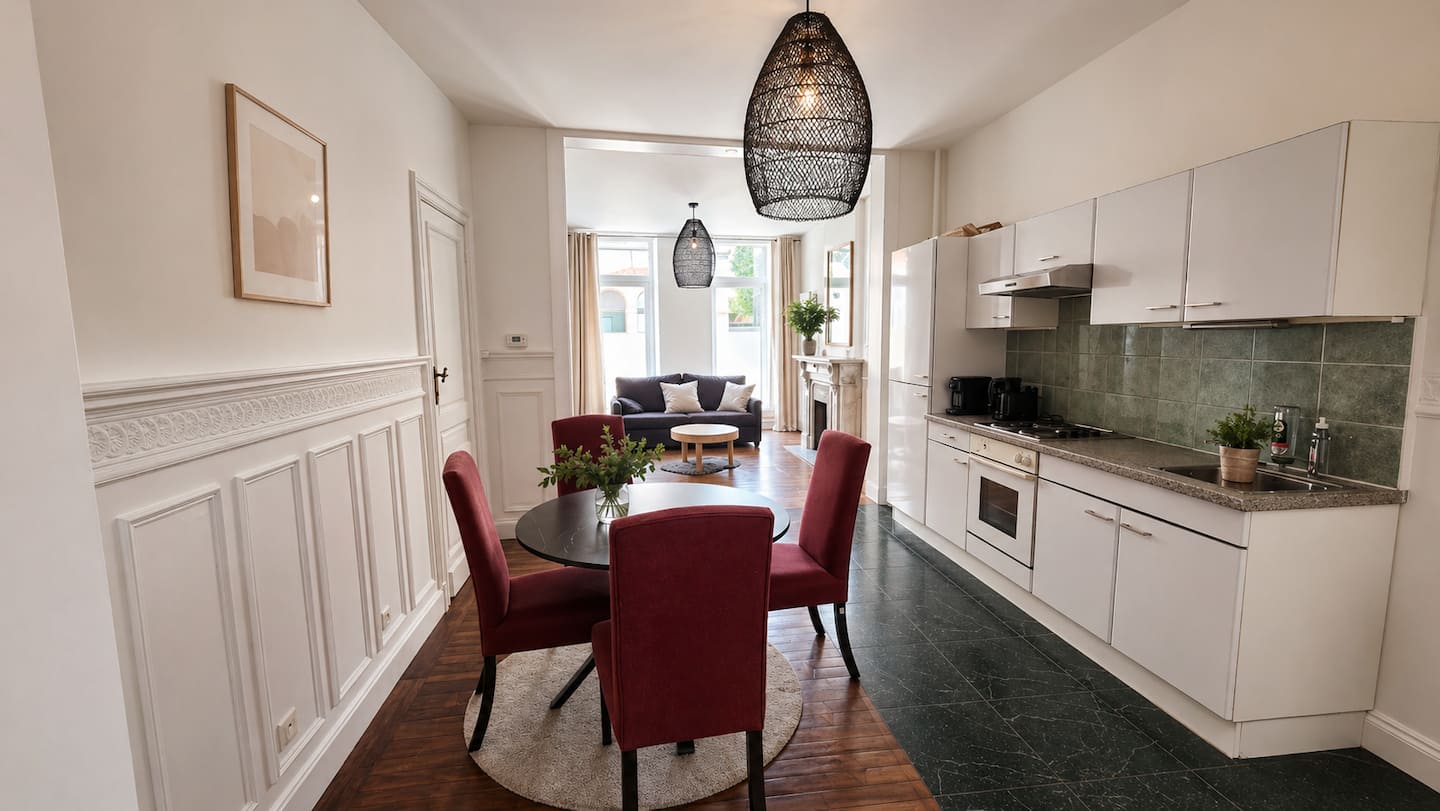
A group apartment or furnished house is built for shared occupancy. Team members have private or shared bedrooms depending on the property, plus common living areas, kitchens, laundry facilities, and one address for the group. For employers, the distinction is not only about accommodation style. It affects budget forecasting, worker wellbeing, transport planning, and the time required to manage the stay.
For teams of six to 16 people, the cost and administration of individual hotel bookings can rise quickly. A furnished corporate property provides a more consolidated setup: employees arrive at an equipped home rather than trying to make a hotel room function as a living space for an extended assignment.
Cost Control Over Longer Assignments
Nightly hotel pricing is straightforward at the start, but it can become difficult to control over a multi-week deployment. Rates may vary by season, local events, availability, room type, breakfast, parking, laundry, and other extras. Multiply those variables across several employees and the total can become unpredictable.
Group accommodation is usually more suitable when a project has a defined medium-term horizon. A furnished house or apartment can accommodate several workers under one rental arrangement, allowing companies to evaluate the full housing cost for the team rather than reviewing a long list of room-night charges.
The comparison should include more than the room rate. Ask what workers will need to live comfortably for the whole stay: furniture, kitchen equipment, utilities, internet, linens, laundry access, parking, and space to store personal belongings. If these needs require separate services or daily purchases, the apparent hotel convenience may carry a higher operational cost.
An all-inclusive corporate housing arrangement helps make budgeting more predictable. Instead of separating rent, furniture, Wi-Fi, utility use, and multiple service fees, companies can work from a clearer monthly housing figure. That matters for procurement teams and site managers who need to monitor project costs while keeping workers close to the job.
Comfort Is a Productivity Issue, Not a Perk
A hotel room works well for sleeping between meetings. It is less effective as a base for technicians, contractors, or employees working long shifts for several months. Limited floor space, no real kitchen, and no separate living area can make downtime feel restrictive. This becomes more noticeable when workers are away from home for extended periods.
In a furnished group property, employees can prepare meals, sit in a shared living area, do laundry, and maintain routines outside working hours. These are practical advantages, particularly for teams on industrial sites, construction projects, shutdowns, or relocation assignments.
Shared accommodation does not mean giving up personal space. The best setup matches the property to the team structure, shift patterns, and expected length of stay. A crew working early starts may need enough bathrooms and parking. A team with staggered shifts may benefit from separate bedrooms and quiet common areas. A longer assignment may call for more storage and a properly equipped kitchen.
Employers should also consider the impact of meal arrangements. Daily restaurant meals can become expensive and repetitive. A kitchen gives workers choice and can reduce the logistics of finding food after late shifts or on weekends. For many teams, that simple feature improves the experience of being assigned away from home.
Administration: One Accommodation Plan or Many Reservations?
Booking hotel rooms can appear quick when the team is small. The administrative burden grows when dates change, workers are replaced, extensions are required, or several people need different room arrangements. Each change can lead to new confirmations, revised prices, separate invoices, and questions about who is responsible for incidental charges.
A corporate group rental is easier to manage when the objective is to house a team as a unit. One property, one point of contact, and company invoicing reduce the number of moving parts. This is especially useful when operations managers are coordinating travel, site access, safety requirements, and staffing at the same time.
Before confirming accommodation, establish who will manage arrivals, report maintenance needs, approve extensions, and communicate changes in headcount. A provider familiar with corporate teams can structure the process around those needs rather than treating every employee as an unrelated leisure guest.
For international companies sending staff to Belgium, responsive communication is equally valuable. A clear contact person and multilingual support can prevent delays when travel plans shift or workers arrive outside standard office routines.
When Multiple Hotel Rooms Still Make Sense
Hotels remain the practical choice in certain situations. A one- or two-night visit, an executive trip, a team attending an event in the city center, or an assignment with no confirmed end date may not justify a monthly furnished rental. Hotels can also suit teams that require daily housekeeping and have little need for cooking or shared living space.
Privacy can be another consideration. If employees have highly varied schedules, travel independently, or need to meet clients from their accommodation, separate hotel rooms may be preferable. The goal is not to force every project into one format. It is to select accommodation that fits the actual work pattern.
The tipping point usually comes when the stay extends beyond a brief visit and several employees need housing in the same area. At that stage, a group property deserves a direct comparison against the total hotel cost, not only the advertised nightly rate.
How to Choose the Right Option for Your Team
Start with the facts of the assignment: the number of workers, expected duration, worksite location, shift schedule, transport requirements, and likely changes in headcount. Then assess what is included in each accommodation option and who will handle the administration.
For a team staying one month or more, look for properties that are ready for immediate occupancy. Furniture alone is not enough. The accommodation should have equipped kitchens, high-speed Wi-Fi, utilities, practical bedrooms, and the capacity to house the full group comfortably. Contract flexibility also matters because projects can run longer than planned or require additional personnel.
Location should be evaluated from the worksite outward. A lower rental cost can lose its value if workers face a long daily commute, difficult parking, or poor access to major routes. Housing near the project location supports punctuality, reduces transport complexity, and gives employees more time outside work.
Belga Promo provides fully furnished corporate houses and apartments in Belgium for groups of six to 16 people, with stays starting from one month. The focus is practical: ready-to-live-in accommodation, included essentials, flexible terms, and one business-oriented arrangement for the team.
The best housing decision is the one that keeps workers settled, budgets clear, and project managers free to focus on the work itself. For longer team deployments, treat accommodation as part of your operating plan, not as a collection of overnight bookings.