A delayed housing decision can hold up an entire deployment. When technicians, contractors, or relocated employees arrive in Belgium without suitable accommodation, site managers lose time coordinating hotel rooms, transport, expenses, and last-minute changes. This corporate workforce housing guide explains how to arrange practical, furnished group housing that supports the job from day one.
For stays lasting several weeks or months, the objective is not simply to find beds near a worksite. Employers need a dependable living arrangement: enough capacity for the team, kitchens and Wi-Fi already in place, predictable monthly costs, and one clear point of contact. The right setup reduces administrative work while giving employees a more stable place to live between shifts.
Start with the operational requirements
Workforce accommodation should be planned around the assignment, not around a generic travel policy. A team working rotating shifts near an industrial site has different needs from employees relocating for an office project. Begin with the arrival date, expected end date, team size, work location, and transport requirements.
Capacity is usually the first practical question. A house or apartment designed for six to sixteen occupants can be easier to manage than several separate hotel bookings. It keeps the team in one place, simplifies communication, and can reduce local transport coordination. However, group housing must still give occupants appropriate sleeping arrangements, shared living space, and enough bathroom and kitchen capacity for daily use.
Location should be assessed in terms of real travel time, not just distance on a map. Consider shift start times, access to major roads, parking needs, public transportation, and the availability of stores or services nearby. A lower monthly rate can become less attractive if employees spend significant time commuting or require multiple vehicles to reach the site.
Define who will manage the stay
Every accommodation booking needs an accountable company contact. This person should be able to confirm headcount, authorize changes, receive invoices, and communicate arrival details. For larger projects, it also helps to identify an on-site team lead who can raise practical issues quickly.
Clear responsibility prevents common problems such as unreported departures, extra occupants, or uncertainty over who is handling a maintenance request. It also makes extensions easier when project schedules change.
Choose furnished housing over fragmented hotel stays
Hotels can be appropriate for short visits, one or two people, or uncertain travel dates. For larger teams and medium-term assignments, they often create a costly and fragmented arrangement. Employees may be spread across rooms or properties, meals become an ongoing expense, and each reservation can require separate management.
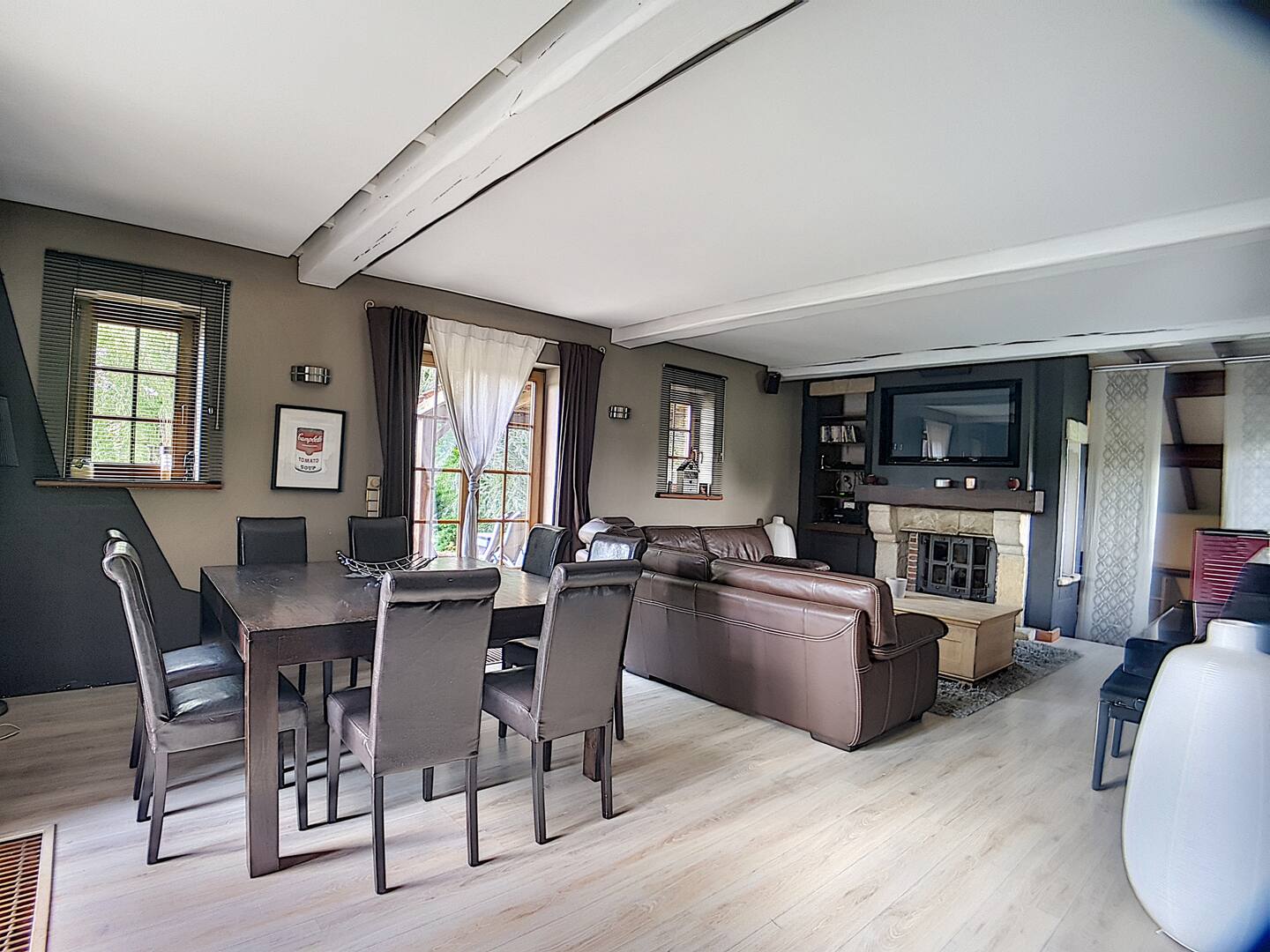
Fully furnished corporate housing is designed for a different use case. Employees can arrive with personal belongings and begin living there immediately. A properly equipped property should include beds, furniture, kitchen equipment, appliances, utilities, and high-speed Wi-Fi. This matters because a worker arriving after a long journey should not have to purchase cookware, arrange internet service, or wait for utility activation.
The financial comparison should go beyond the nightly hotel rate. Evaluate the total monthly accommodation cost, including utilities, Wi-Fi, furnishings, laundry arrangements, parking where relevant, and the need for meals outside the property. A furnished house with a usable kitchen can help employees manage daily living costs and reduce reliance on restaurants.
There is a trade-off. Shared accommodation requires employees to live alongside colleagues, which may not suit every team or seniority level. For long-running projects, employers may choose a mix of group houses for operational crews and separate apartments for managers or employees with different privacy needs. The best arrangement depends on the composition of the workforce, not just the headcount.
Build a cost model that reflects the full stay
A reliable housing budget should be based on the expected duration and the likely cost of schedule changes. Projects in construction, maintenance, logistics, and industrial operations rarely follow a perfect calendar. A contract that looks inexpensive at the start may become difficult to manage if it cannot be extended or adjusted when the work continues.
Ask for clarity on what the monthly price includes. In an all-inclusive corporate housing arrangement, the company should understand whether rent, furniture, utilities, internet, and administrative handling are covered under one agreed amount. This makes internal cost allocation easier and limits unexpected invoices.
Company invoicing is particularly useful when several employees share the same accommodation. Rather than collecting receipts from individual travelers or reconciling multiple hotel folios, the employer has a single business expense tied to the project or department. Procurement and finance teams can then review the cost against the agreed occupancy period.
Do not base the decision solely on the cost per person. Consider the cost of arranging alternatives, the time spent handling employee complaints, and the productivity impact of unsuitable housing. A property that is ready for occupancy and located sensibly for the site can provide better value even if its headline rate is not the lowest available.
Plan for vacancy and extensions
Projects may start with a full house and later operate with fewer occupants. Before confirming a booking, establish how changes in headcount will be handled. In some situations, maintaining the property is worth the cost because it preserves space for replacement staff or incoming specialists. In others, downsizing is the better operational decision.
Extensions should be discussed before the original end date, especially during busy periods or in locations with limited group housing. Early communication gives the housing provider a better chance of protecting availability and presenting alternatives if the current property cannot be retained.
Check readiness before employees arrive
A property can be furnished without being operationally ready. Employers should confirm the practical details that affect the first evening and the first workday: arrival process, keys, Wi-Fi access, heating, kitchen equipment, linens where provided, parking, waste collection, and contact procedures for urgent issues.
For international teams, clear arrival instructions are especially valuable. Employees may arrive outside standard office hours, travel in different vehicles, or have limited familiarity with the local area. Simple instructions reduce calls to site managers and avoid unnecessary delays at check-in.
It is also sensible to set basic house rules internally. These can cover occupancy, visitor expectations, smoking policy, parking, noise, cleaning responsibilities, and how maintenance concerns should be reported. The purpose is not to overmanage employees. It is to protect the property, maintain a workable environment for everyone, and avoid disputes that distract from the project.
Use a provider that understands business deployment
Residential rentals are not always structured for workforce accommodation. A private landlord may offer a suitable property but lack the flexibility, documentation, furnishing level, or response process that a company needs. Hotels, meanwhile, are optimized for individual guests rather than teams managing a multi-month assignment.
A corporate housing provider should understand business requirements from the first inquiry. That includes group capacity, medium-term contracts, ready-to-live-in furnishings, multilingual communication, and company invoicing. It should also be able to discuss availability quickly, because many deployments are confirmed only shortly before work begins.
Belga Promo focuses on furnished houses and apartments for professional teams in Belgium, with accommodation suited to groups of six to sixteen people and stays beginning at one month. For employers, the practical advantage is a single operational solution rather than a collection of separate travel arrangements.
Request a quote with the right details
The speed and accuracy of a housing quote depend on the information supplied. Provide the number of employees, preferred location or worksite, move-in date, expected duration, vehicle or parking needs, and any essential requirements. If the team includes employees with different schedules or privacy needs, state that early.
Avoid treating the first quote as a final commitment if key project details remain uncertain. Instead, use the discussion to test availability, compare suitable property types, and understand the terms for changes. A provider can offer better guidance when it knows whether the assignment is a fixed three-month installation or a project likely to extend through the year.
The most effective workforce housing decisions are made before the team is on the road. Give accommodation the same planning attention as transport, equipment, and site access, and employees will arrive ready to work rather than ready to solve a housing problem.