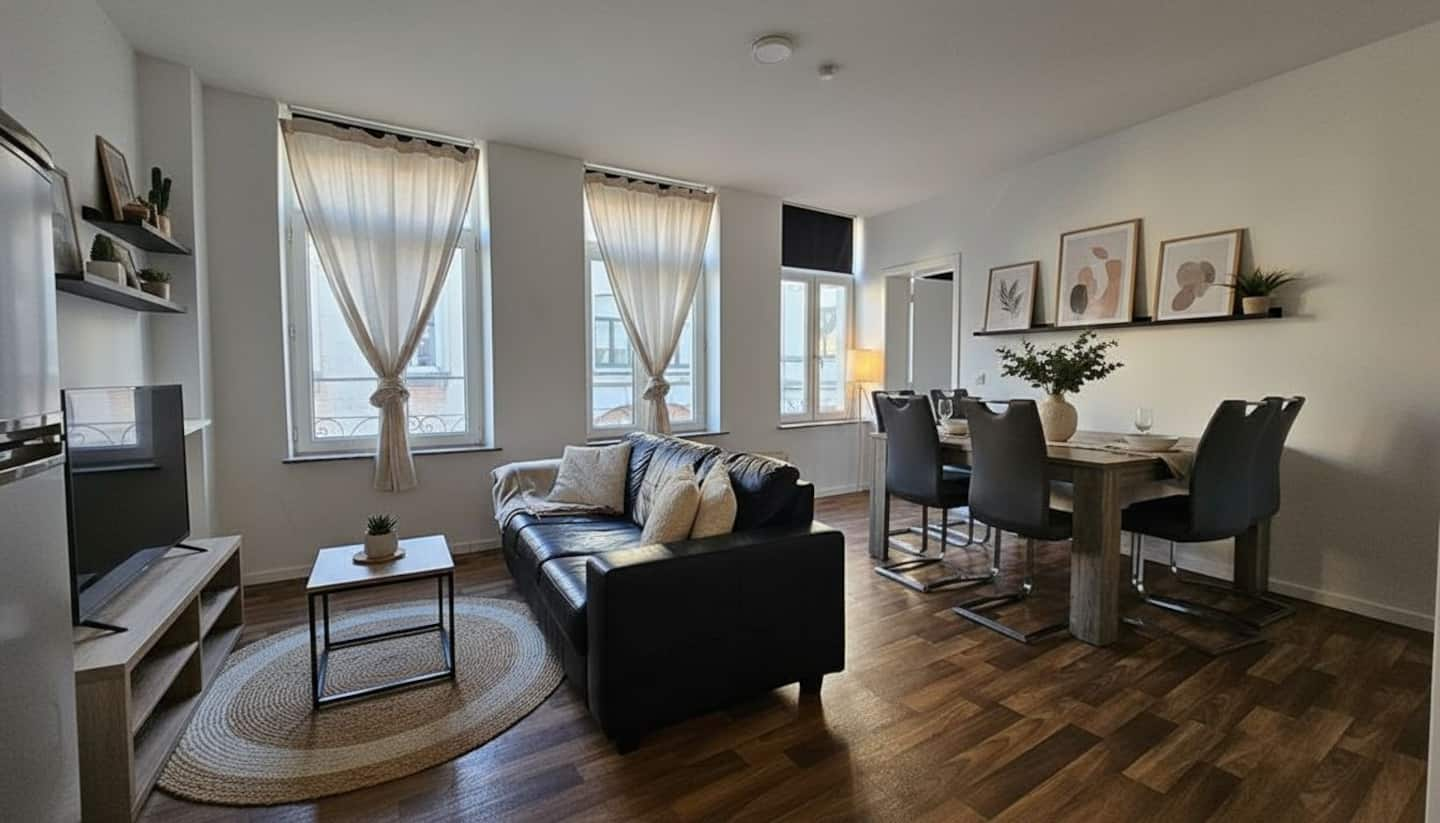
When a project starts in Belgium, accommodation problems show up fast. Hotel rooms get expensive, teams end up split across different locations, and admin work grows with every booking. For companies comparing options, corporate housing for workers in Belgium is often the more practical choice when employees need to stay for several weeks or several months.
This type of housing is built around operational needs, not short tourist stays. Companies need furnished properties that are ready immediately, easy to manage, and suitable for workers who need to live comfortably near a site, client location, or transport connection. The question is not just where people will sleep. It is how to house a team in a way that supports budgets, schedules, and day-to-day coordination.
Why corporate housing for workers in Belgium works better than hotels
Hotels can work for a few nights or a short visit from one manager. They are rarely the best long-stay solution for technicians, contractors, installation teams, or rotating workers. Once a company is booking multiple rooms for several people over a month or more, costs rise quickly and flexibility usually drops.
Corporate housing changes that equation. A furnished house or apartment designed for group occupancy gives workers shared living space, proper kitchens, reliable internet, and room to settle into a routine. That matters more than many employers expect. When employees can cook, rest, and live in a more normal environment, the stay becomes easier to manage for both the company and the team.
There is also a direct administrative benefit. Instead of handling separate hotel reservations, changing room availability, and multiple receipts, businesses can work with one rental agreement and one invoicing structure. For HR teams, operations managers, and procurement departments, that simplicity saves time.
What companies usually need from worker accommodation
The best housing option depends on the size of the team, the project duration, and the work location. A small engineering team on a six-week assignment does not have the same requirements as a construction crew staying for six months. Still, most companies are looking for the same core outcomes.
First, the property needs to be ready for immediate occupancy. Furnishings, equipped kitchens, utilities, and Wi-Fi should already be in place. Delays caused by setup, utility activation, or missing household basics create unnecessary friction.
Second, occupancy capacity matters. Many employers are not looking for individual executive apartments. They need accommodation that can house groups efficiently, whether that means six workers or a larger team of up to 16 people. Group housing keeps logistics simpler and can reduce transport complexity when teams need to leave together for a site each day.
Third, companies want cost predictability. Medium-term projects already carry enough uncertainty. Housing should not add variable costs through changing hotel rates, breakfast charges, parking fees, laundry costs, or room-by-room billing. A single all-inclusive rental structure is easier to budget.
Key features to look for in corporate housing for workers Belgium companies can actually use
Not every furnished rental is suitable for workforce accommodation. Some properties are designed for short city stays, couples, or leisure travel. That may look acceptable in photos, but it often creates problems once a real work team moves in.
A workable corporate housing setup should be designed around practical use. Bedrooms need to support real occupancy levels. Kitchens need to be equipped enough for regular meals, not just basic decoration. Internet needs to be fast and stable enough for both communication and planning. Utilities need to be active from day one. Parking, local access, and travel time to work sites should also be part of the decision.
Contract terms matter too. Companies often need rentals starting from one month, with the option to extend depending on project timelines. That flexibility is valuable because project schedules do not always follow the original plan. A rigid contract may look fine at booking stage and become a problem later.
Invoicing is another detail that becomes important in practice. Business clients usually need company invoices, clear rental terms, and a setup that fits internal approval and accounting processes. Private holiday-style bookings are not built for that.
Cost control is about more than the nightly rate
Many accommodation decisions are still made by comparing the headline cost of a hotel room against the monthly cost of a furnished rental. That is too narrow.
The real cost includes how many people can stay in one property, how much time admin teams spend managing bookings, whether workers need daily restaurant meals, and how efficiently the team can travel to and from the project location. A hotel may appear simple at first, but it often becomes expensive when a company is housing a full crew over time.
Corporate housing is usually stronger on total cost control because it bundles what companies already need. Furniture, utilities, kitchen equipment, Wi-Fi, and ready-to-use living space are included in one arrangement. Workers can prepare meals, stay together, and live in a more sustainable way during longer assignments.
That said, it depends on the length of stay and team structure. For very short visits, hotels may still be the easiest option. For medium-term or longer assignments, furnished group housing is typically the better operational fit.
Location matters as much as the property itself
The right accommodation is not only about interior features. It also needs to support the movement of people. For employers, that usually means choosing housing near industrial zones, project areas, logistics routes, or major transport links.
A well-located property can reduce daily transport time, make shift changes easier, and lower the risk of lateness or fatigue. If a team is spending unnecessary time commuting because the accommodation was chosen on price alone, the hidden cost can become significant.
This is why many businesses prioritize housing in key Belgian locations rather than simply searching for the cheapest available beds. The useful question is whether the property helps the project run better. If it does, the value is higher.
What a reliable provider should make easy
Companies booking worker accommodation are not looking for a complicated real estate process. They need speed, clarity, and a provider that understands business use.
A reliable corporate housing partner should be able to confirm availability quickly, explain exactly what is included, and propose options that match team size and rental duration. The process should be straightforward from first contact to move-in. If a company has to chase details, translate unclear conditions, or piece together missing services, the solution is not efficient enough.
This is where a turnkey offer makes a real difference. Fully furnished houses and apartments, equipped for group occupancy and supported by flexible terms, remove many of the common delays. For companies placing workers in Belgium, that can mean the difference between a smooth deployment and a week of avoidable coordination problems.
Providers such as Belga Promo focus on this business need directly, with medium-term furnished accommodation for teams, all-inclusive pricing structures, and housing arranged around immediate usability rather than leisure travel expectations.
How to choose the right setup for your team
The best decision usually starts with four practical questions. How many people need housing, for how long, in which area, and under what working pattern? Once those basics are clear, the right property type becomes easier to identify.
A smaller team on a shorter project may be well served by a compact furnished apartment setup, while larger crews usually benefit more from houses designed for shared occupancy. If the assignment could extend, contract flexibility should be discussed early rather than treated as an afterthought.
It is also worth thinking about worker comfort in a realistic way. Comfortable does not mean luxury. It means enough space, proper facilities, reliable internet, and a setup that allows people to live normally between shifts. Companies that get this right tend to have fewer accommodation complaints and less disruption during the assignment.
For businesses managing temporary deployments, relocations, maintenance shutdowns, or installation projects, housing should support the work rather than create extra work. That is the real value of choosing the right corporate accommodation in Belgium.
A practical housing decision usually pays off twice - once in the budget, and again in how smoothly the project runs.