
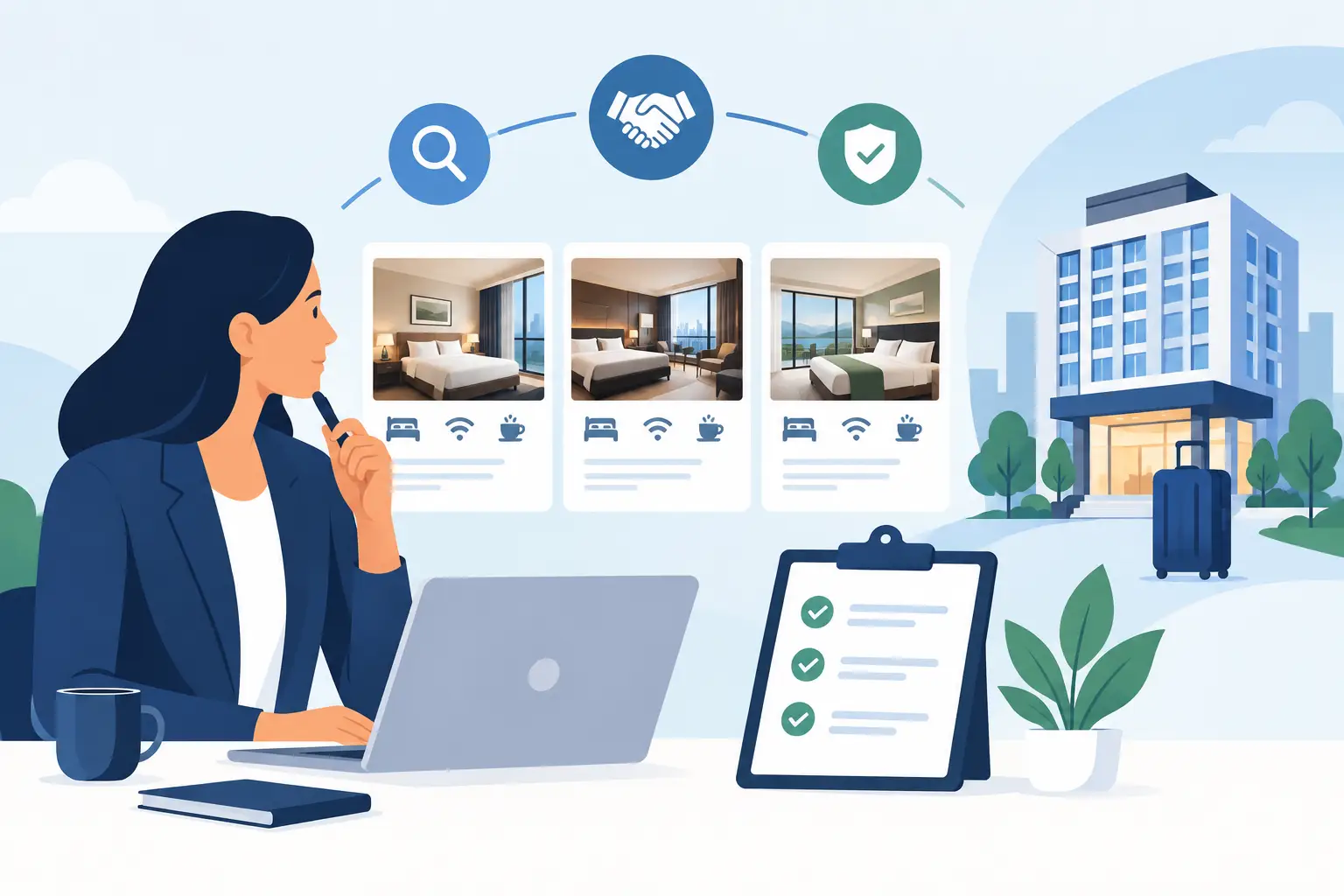
When a project team needs to start work in Belgium next week, accommodation cannot be treated as a last-minute travel expense. A clear accommodation procurement strategy gives operations, HR, and procurement teams a repeatable way to secure suitable housing, control costs, and keep employees comfortable from their first night on site.
For companies placing technicians, contractors, and project teams for several weeks or months, the best option is rarely a collection of hotel rooms. Group-ready furnished housing can reduce the daily cost per person, simplify administration, and provide a more practical living setup for people working away from home.
Start With the Operational Requirement
Accommodation procurement works best when it begins with the work schedule, not with a generic room search. Before requesting availability, define how many people need housing, where they will work, when they arrive, and how long the assignment is likely to last.
A project with eight electricians working near an industrial site has different requirements from a two-person management relocation. The first may need a furnished house with multiple bedrooms, parking, equipped kitchen facilities, and reliable transport access. The second may prioritize privacy, proximity to offices, and a shorter commitment.
Ask the operational team for realistic dates rather than optimistic ones. A contract scheduled for eight weeks may run for twelve. If extensions are common in your sector, procurement should favor providers that can accommodate changing end dates instead of forcing a complete move halfway through the assignment.
Location should be assessed in travel time, not only city name. A lower rent can become expensive if employees spend excessive time commuting each day or require multiple vehicles. Consider the route to the worksite, shift times, parking needs, access to major roads, and nearby essentials such as supermarkets, pharmacies, and public transportation.
Set a Total Cost Standard, Not a Nightly Rate Target
A low nightly rate does not automatically mean low accommodation spend. Hotel bookings may look straightforward at the start, but costs can rise quickly once meals, laundry, parking, taxes, repeated booking changes, and individual expense claims are included.
A stronger procurement model compares the total monthly cost per occupied bed. This means looking at rent, utilities, Wi-Fi, furniture, kitchen equipment, cleaning arrangements, deposits, administration time, and transport implications together. For medium-term stays, a furnished house or apartment with shared living facilities is often more cost-effective than separate hotel rooms.
All-inclusive pricing is particularly useful for project budgeting. When utilities, high-speed Wi-Fi, furniture, and equipped kitchens are included in one agreed price, finance teams can forecast costs with greater confidence. It also reduces the need to reconcile separate bills from service providers or reimburse staff for basic living expenses.
That said, shared accommodation is not the right answer for every employee group. Senior staff, employees with family arrangements, or workers on sensitive assignments may require individual accommodation. A practical strategy allows for exceptions while maintaining a standard group-housing approach where it fits the project.
Build Your Accommodation Procurement Strategy Around Group Capacity
Many companies procure one room at a time because that is how travel booking systems are designed. For workforce deployment, that approach creates unnecessary complexity. Multiple hotel confirmations, fragmented invoices, inconsistent locations, and different booking rules make it harder to manage a team.
A group-capacity model treats accommodation as a site resource. Instead of booking ten separate rooms, procure a house or apartment configured for the team. This gives employees private sleeping areas while providing shared kitchens and living space. It also keeps the group in one location, which can improve coordination for early starts, rotating shifts, and transport planning.
Capacity needs should be confirmed carefully. Do not assume that a property advertised for eight people offers eight suitable beds for adult workers on a long assignment. Verify the bedroom arrangement, bed type, number of bathrooms, kitchen capacity, storage, laundry facilities, and common-space layout. Comfort affects retention, attendance, and the general experience of employees working away from home.
For larger deployments, consider whether it is better to use one large property or several nearby units. One property simplifies supervision and transport, but separate units may be preferable where teams have different shift patterns or where privacy is a greater concern.
Define the Non-Negotiable Inclusions
A furnished corporate accommodation provider should make it clear what is included before the contract is signed. Procurement teams should not need to discover after arrival that internet access, utilities, linens, or basic kitchen equipment require separate arrangements.
For most medium-term worker stays, the core requirement is a ready-to-live-in property. This generally includes furniture, beds, an equipped kitchen, heating, utilities, reliable Wi-Fi, and company invoicing. Depending on the team and location, parking, laundry equipment, outdoor space, and multilingual support may also be important.
Create an internal minimum standard that reflects the reality of your workforce. This is not about adding unnecessary extras. It is about avoiding operational disruption. A technician who cannot prepare meals after a late shift, connect to a video call, wash work clothing, or park near the property will raise issues that the site manager must solve later.
The provider's response process matters as much as the property checklist. Ask who handles maintenance, how urgent issues are reported, whether support is available in relevant languages, and how quickly replacements or repairs can be arranged. Fast availability is valuable, but reliable follow-through is what protects the project once people have moved in.
Use Flexible Contracts Without Sacrificing Control
Project dates change. Client approvals take longer, site work expands, and staffing levels move up or down. Accommodation contracts should give companies enough flexibility to respond without creating uncontrolled costs.
The right level of flexibility depends on the assignment. A known twelve-month relocation can justify a longer commitment and may support better pricing. A construction phase with uncertain completion dates may require a shorter initial term with extension options. In both cases, the contract should state notice periods, extension conditions, payment terms, deposit requirements, and responsibilities for damage clearly.
Avoid selecting a provider solely because it offers the shortest cancellation terms. Very flexible bookings can carry a premium, and they may not guarantee continuity in the same property. The better question is whether the arrangement matches your likely project timeline and whether the provider can offer practical alternatives if the team grows or the work moves.
For recurring projects, establish a preferred-provider process. A supplier that understands your team sizes, invoicing requirements, approval flow, and typical locations can respond faster than a new provider every time. This does not mean accepting poor value. It means reducing repeated sourcing work while maintaining clear service and price expectations.
Make Administration Part of the Buying Decision
Accommodation is often sourced by procurement but managed day to day by operations or HR. If the process is poorly structured, the administrative burden shifts to site managers, who end up handling room changes, receipts, employee complaints, and multiple supplier contacts.
A workable model has one company contact, one clear quote, and one invoice structure aligned with your purchase-order process. Confirm whether invoices can identify the project, cost center, stay period, and property. This makes internal allocation easier and reduces back-and-forth with accounts payable.
It is also useful to designate one authorized person who can approve extensions, occupancy changes, and extra requests. Without this step, suppliers may receive conflicting instructions from project managers, travelers, and finance teams. Clear authority protects both cost control and the employee experience.
Review Performance After Each Deployment
Procurement should assess accommodation after the team has lived in it, not only when the contract is awarded. Ask the site manager whether the location supported daily operations, whether the property capacity was realistic, and whether any service issues affected the team.
Track practical measures such as total cost per person per month, time taken to secure housing, extension frequency, maintenance response time, and employee feedback. These details help improve the next request and reveal whether a supplier is delivering the value promised in the quote.
For companies housing teams in Belgium, Belga Promo provides furnished, fully equipped houses and apartments for groups of 6 to 16 people, with rental periods from one month onward. A single all-inclusive arrangement can give project teams the space they need while keeping accommodation planning manageable.
The most useful next step is simple: before the next project begins, create a short accommodation brief with team size, work location, required move-in date, expected duration, and essential inclusions. That one document will make every supplier conversation faster, clearer, and easier to compare.