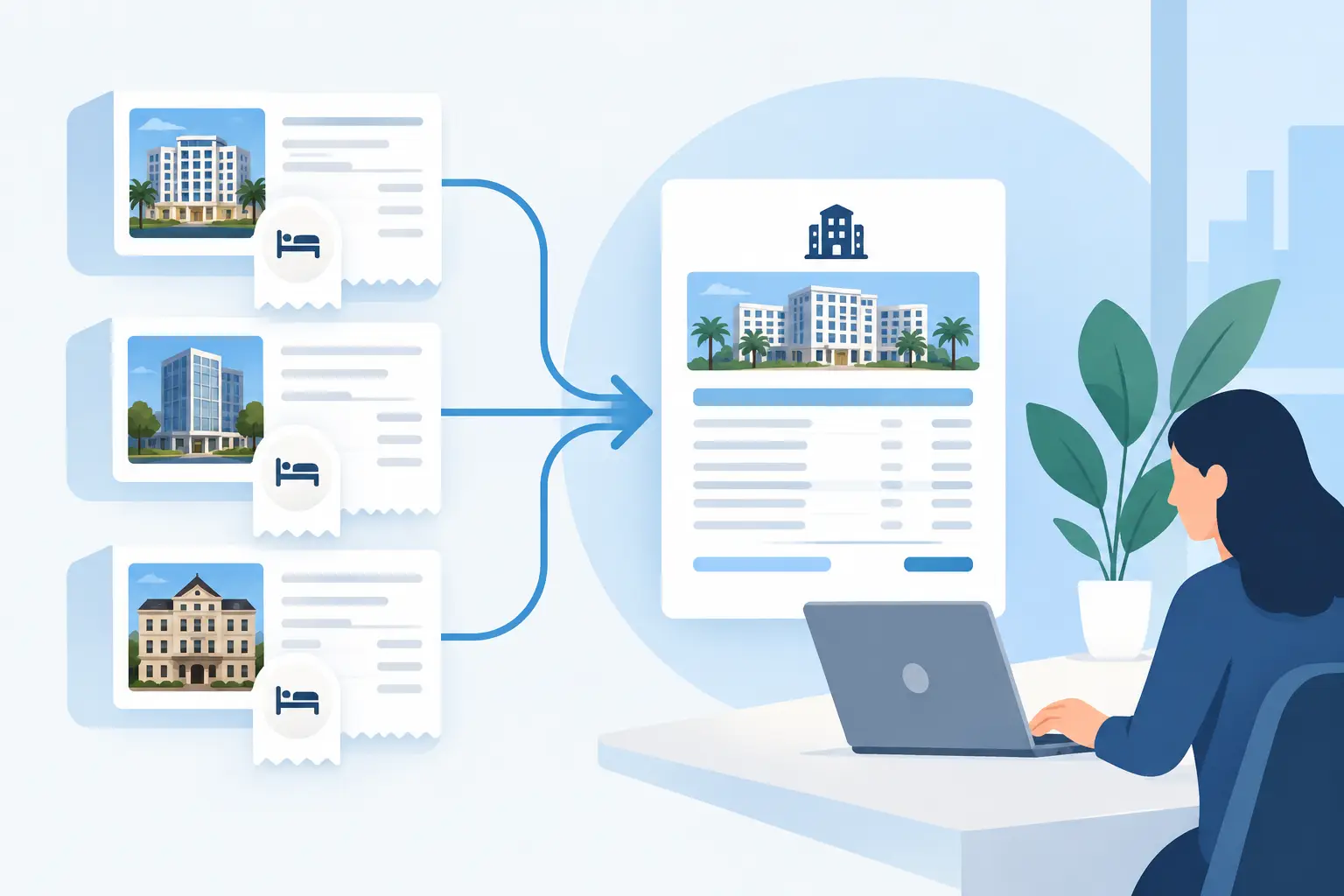
When a project starts in a new city, lodging becomes an operations issue fast. The best options for workforce lodging are not always the most obvious ones, especially when you need to house teams for weeks or months, control costs, and keep workers close to the job site.
For employers, the wrong accommodation choice creates friction everywhere else. It affects travel time, worker rest, daily coordination, expense tracking, and even project timelines. That is why workforce lodging should be assessed like any other business requirement - based on occupancy, duration, location, services included, and administrative simplicity.
What makes a workforce lodging option the right fit?
The right answer depends on how many people you need to house, how long they will stay, and what kind of work they are doing. A short emergency deployment may justify a different setup than a six-month industrial project or a rotating construction team.
In practice, most companies are weighing the same questions. Can the accommodation handle group occupancy? Is it ready for immediate move-in? Are utilities and Wi-Fi included? Will billing be simple for the company? And can the arrangement adapt if the project timeline changes?
Comfort matters, but in a business setting, comfort is tied directly to performance. Workers need proper beds, equipped kitchens, usable common spaces, laundry access, and a location that keeps daily transport realistic. Cheap lodging that creates fatigue, long commutes, or constant administrative issues usually stops being cheap very quickly.
Best options for workforce lodging by project type
Hotels
Hotels are often the first option companies consider because they are familiar and quick to book. For one or two employees on a short assignment, they can make sense. Reception, housekeeping, and flexible nightly stays are useful when schedules are uncertain.
The trade-off is cost and practicality over time. Multiple hotel rooms for a team become expensive fast, and hotel layouts are built for individual travelers, not work crews. There is usually limited space to cook, relax, or spend time together outside the room. For stays longer than a few days, that starts to affect both budget and comfort.
Hotels also create more fragmented administration. If several employees are booked across multiple rooms, dates, and rate categories, finance teams often end up managing a stack of invoices and incidental charges.
Budget hotels and motels
Budget properties can reduce nightly rates, but they usually reduce living quality at the same time. For very short stays, they may be workable. For multi-week housing, they often create problems around privacy, noise, storage, and food options.
This category tends to look cost-effective on paper, but the full picture is less favorable when workers are eating every meal out, have no proper shared space, and spend weeks in rooms designed only for sleeping. It may cover a basic need, but it rarely supports a productive long-term deployment.
Standard apartment rentals
A regular apartment rental can work for one employee or a small number of staff, especially for relocation cases or office-based assignments. It offers more privacy and a more normal living environment than a hotel.
The limitation is that standard rentals are not usually structured for workforce housing. They may be unfurnished, require utility setup, involve long lease terms, or restrict occupancy in ways that do not match a team deployment. For companies that need speed and flexibility, that setup often creates too much friction.
Short-term vacation rentals
Vacation rentals can appear attractive because they are furnished and ready to occupy. In some cases, they provide more space than a hotel and may suit a small team for a limited period.
Still, they are not consistently designed for corporate use. Availability can be unstable, property standards vary, and business invoicing is not always straightforward. Many are optimized for leisure stays, not the practical needs of technicians, contractors, or rotating work teams.
Furnished corporate housing for teams
For medium-term assignments, furnished corporate housing is usually the most balanced option. This is especially true when the accommodation is designed specifically for group occupancy and professional stays rather than tourism.
A properly structured workforce housing solution gives companies what they actually need: furnished houses or apartments, equipped kitchens, high-speed Wi-Fi, included utilities, flexible contract terms, and one clear business invoice. That reduces setup time and removes a large part of the administrative burden.
It also tends to work better for workers themselves. Shared housing with enough space, proper sleeping arrangements, and daily-living essentials creates a more stable routine than placing a whole team in separate hotel rooms. For projects lasting a month or longer, that difference is significant.
Why furnished group housing is often the strongest choice
If your workforce stays are measured in weeks or months, furnished group housing usually offers the best cost-to-function ratio. It sits between the convenience of a hotel and the space of a residential rental, without forcing the company to manage furniture, utilities, internet installation, or scattered bookings.
That matters most when you are housing six, eight, or twelve workers at once. Booking individual rooms may look simple at first, but the cost compounds quickly. Group housing spreads that cost more efficiently while giving people kitchens, shared living areas, and a setup that feels workable rather than temporary.
This model is also easier to scale. If a project expands, companies can add accommodation by unit rather than rebuild the entire lodging plan room by room. If headcount changes, flexible terms are easier to manage than traditional long leases.
For employers operating in Belgium, this is where a provider such as Belga Promo fits naturally into the decision. The value is not just the property itself. It is the operational package: ready-to-live-in housing, group capacity, company invoicing, and faster placement for teams that need to start work without delays.
The decision factors companies should compare
Occupancy capacity
The first question is simple: how many people need to stay together? Some accommodation options work for one or two employees but fail once you need to house a full crew. Group-ready houses and apartments are more practical when teams need to stay close, coordinate easily, and avoid splitting across multiple addresses.
Length of stay
Stay duration changes the economics. Hotels can be acceptable for a few nights. For one month, three months, or longer, furnished corporate lodging usually becomes the more rational option from both a cost and comfort perspective.
Included services
Always check what is actually included. Furniture, kitchen equipment, Wi-Fi, utilities, bed linens, and laundry access should not be treated as small details. If they are missing, the company either pays extra or loses time arranging them.
Location and commuting
A lower rental rate outside the project area is not always a saving. Long daily travel times add transport costs, reduce rest time, and make shift planning harder. Lodging should be assessed against the real operating geography of the job.
Contract flexibility
Projects move. Delays happen, assignments get extended, and team sizes change. A lodging solution that is too rigid can become expensive even if the base rate looked attractive.
Administrative simplicity
One company invoice is easier to manage than a mix of individual bookings, deposits, reimbursements, and utility accounts. Procurement and finance teams usually feel the difference immediately.
Common mistakes when booking workforce lodging
One common mistake is choosing based only on nightly price. That works poorly when teams stay for extended periods. The better comparison is total living cost, including meals, transportation, setup time, and admin effort.
Another mistake is using accommodation built for tourists to solve a business housing problem. Leisure properties can be fine in isolated cases, but they are rarely consistent enough for repeat corporate use.
Companies also underestimate the impact of worker living conditions. If employees have nowhere to cook, no decent common area, and no practical sleeping setup, morale and productivity tend to drop. Workforce lodging is not a side detail. It supports the project.
How to choose the best option for your team
Start with the basics: team size, project duration, location, and move-in date. Then narrow the field to accommodation that can handle those requirements without extra setup. If your stay is longer than a few days and involves multiple workers, ask whether the property is actually built for that use.
Look for a lodging arrangement that is immediately livable, commercially invoiced, and flexible enough to adapt. That usually leads companies away from scattered hotel bookings and toward furnished, all-inclusive team housing.
The best workforce lodging choice is the one that reduces friction across the whole assignment - for operations, finance, and the people doing the work. When housing is set up properly, your team can focus on the job instead of the logistics around it.
A good lodging decision should feel boring after move-in. No missing utilities, no billing surprises, no daily workaround. Just a place your team can use from day one and keep using for as long as the project requires.