When a project that was supposed to last six weeks turns into six months, housing becomes an operational issue fast. If you need to gérer logement longue mission entreprise effectively, the real challenge is not just finding beds. It is securing reliable, ready-to-live-in accommodation that keeps teams productive, controls costs, and reduces admin from day one.
For HR, operations, and procurement teams, long assignment housing sits at the intersection of budget, logistics, and worker welfare. A poor setup creates daily friction - late check-ins, missing equipment, scattered invoices, long commutes, and unhappy staff. A good setup is much simpler: the team arrives, settles in immediately, and the company knows exactly what is included.
What matters most when you gérer logement longue mission entreprise
The first mistake many companies make is treating a long assignment like a short business trip. Hotels can work for a few nights or a week. They become expensive, restrictive, and inefficient over multiple months, especially when several workers or technicians need to stay near the same site.
A longer mission changes the decision criteria. At that point, comfort is no longer a nice extra. It affects attendance, morale, rest, and retention. Teams need furnished spaces, equipped kitchens, stable Wi-Fi, laundry access, and enough room to live normally between shifts. They also need practical proximity to the job site, major roads, or industrial areas. If housing saves money but adds ninety minutes of commuting each day, the savings are often not real.
Admin also becomes more important as the stay extends. Separate bookings, utility contracts, deposit questions, and fragmented billing create workload that most companies do not want. The right corporate housing setup reduces moving parts by bundling accommodation, furniture, utilities, internet, and invoicing into one clear arrangement.
Start with the assignment, not the property
The best housing decisions begin with the mission profile. Before comparing apartments or houses, define the operating reality. How many people need to stay? Are they all starting at once, or will occupancy ramp up? Is the team static, or will workers rotate in and out? How close does the property need to be to the site? And how likely is the project to extend?
These questions shape the housing model. A small rotating group may need more flexibility than a fixed team of ten. A technical crew working early shifts may prioritize travel time and parking over a city-center location. A multinational workforce may need multilingual support and a move-in process that works even when arrivals happen outside normal office hours.
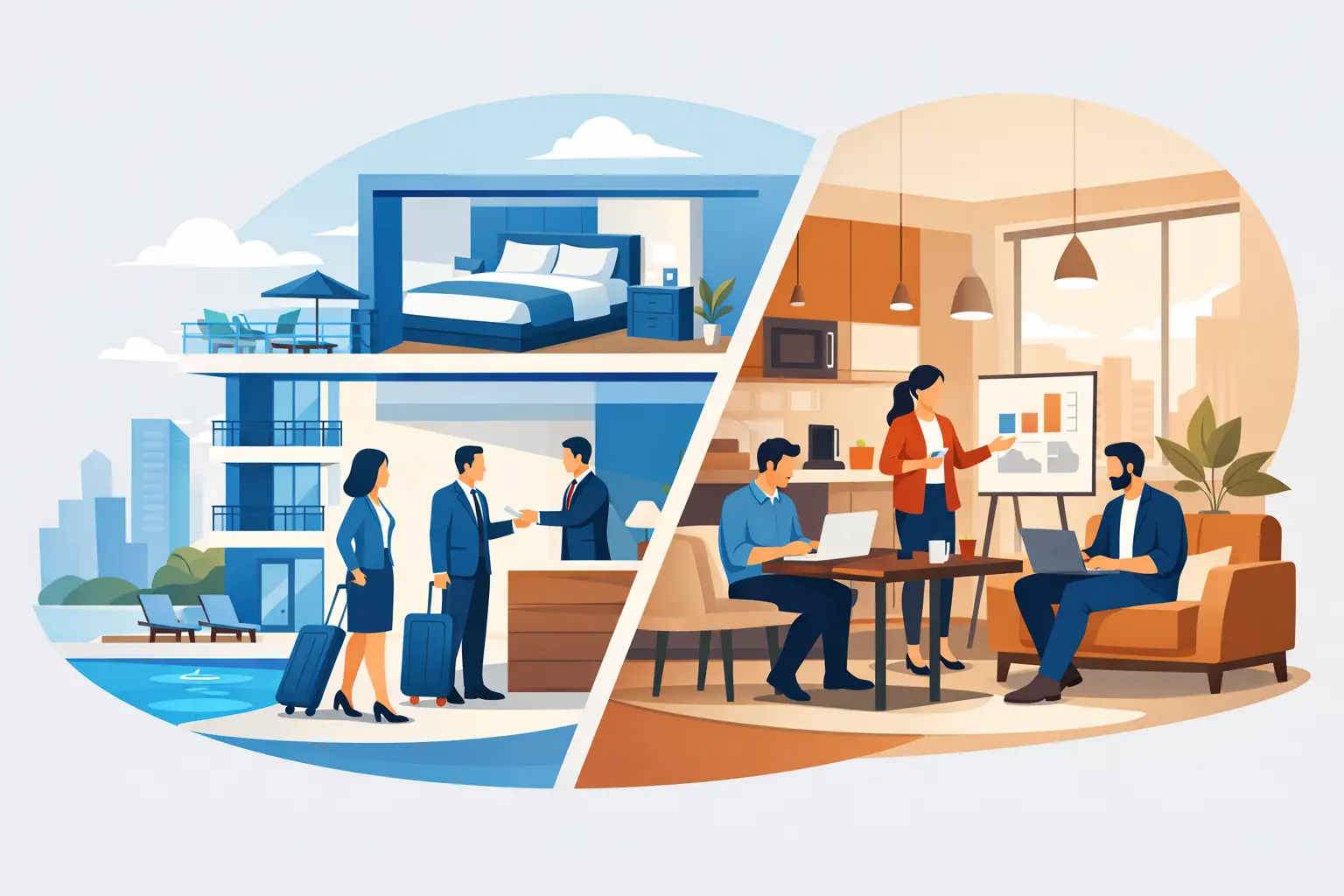
This is why group-ready furnished housing is often a stronger fit than standard rentals. Traditional rentals usually assume private tenants, long commitments, and self-managed setup. Corporate long-stay housing is structured for business use from the start.
Cost control is more than the nightly rate
Companies often compare housing options on headline price and miss the operational cost behind it. A hotel may look straightforward, but the total bill rises quickly when you multiply rooms, nights, meals, parking, and laundry. Short-term booking platforms can appear cheaper, but they may bring inconsistent quality, changing availability, and weak support if something goes wrong mid-stay.
To gérer logement longue mission entreprise properly, compare full occupancy cost instead of just base rent. Ask what is included and what still needs to be arranged separately. Furniture, kitchen equipment, utilities, internet, cleaning arrangements, and company billing all affect the actual cost. So does housing density. A well-configured house or apartment for six to sixteen people can be significantly more cost-efficient than booking multiple hotel rooms for the same team.
There is also a hidden cost in poor standardization. If every worker is placed in a different location with different rules, your internal team spends more time answering questions, fixing issues, and tracking expenses. Standardized accommodation lowers admin and makes budgeting more predictable.
The housing itself has to match workforce reality
Not every furnished property is suitable for business teams. This is where many offers look acceptable on paper but fail in practice. Leisure-oriented rentals are usually designed for short personal stays, not for workers living on assignment for weeks or months.
For professional use, layout matters. Teams need enough beds, but they also need a practical shared setup. Functional kitchens reduce meal costs. Common areas help workers decompress after long shifts. Reliable Wi-Fi supports communication and planning. Adequate bathrooms matter more than many companies expect when multiple occupants share a property. Parking can be essential for technicians or mobile crews.
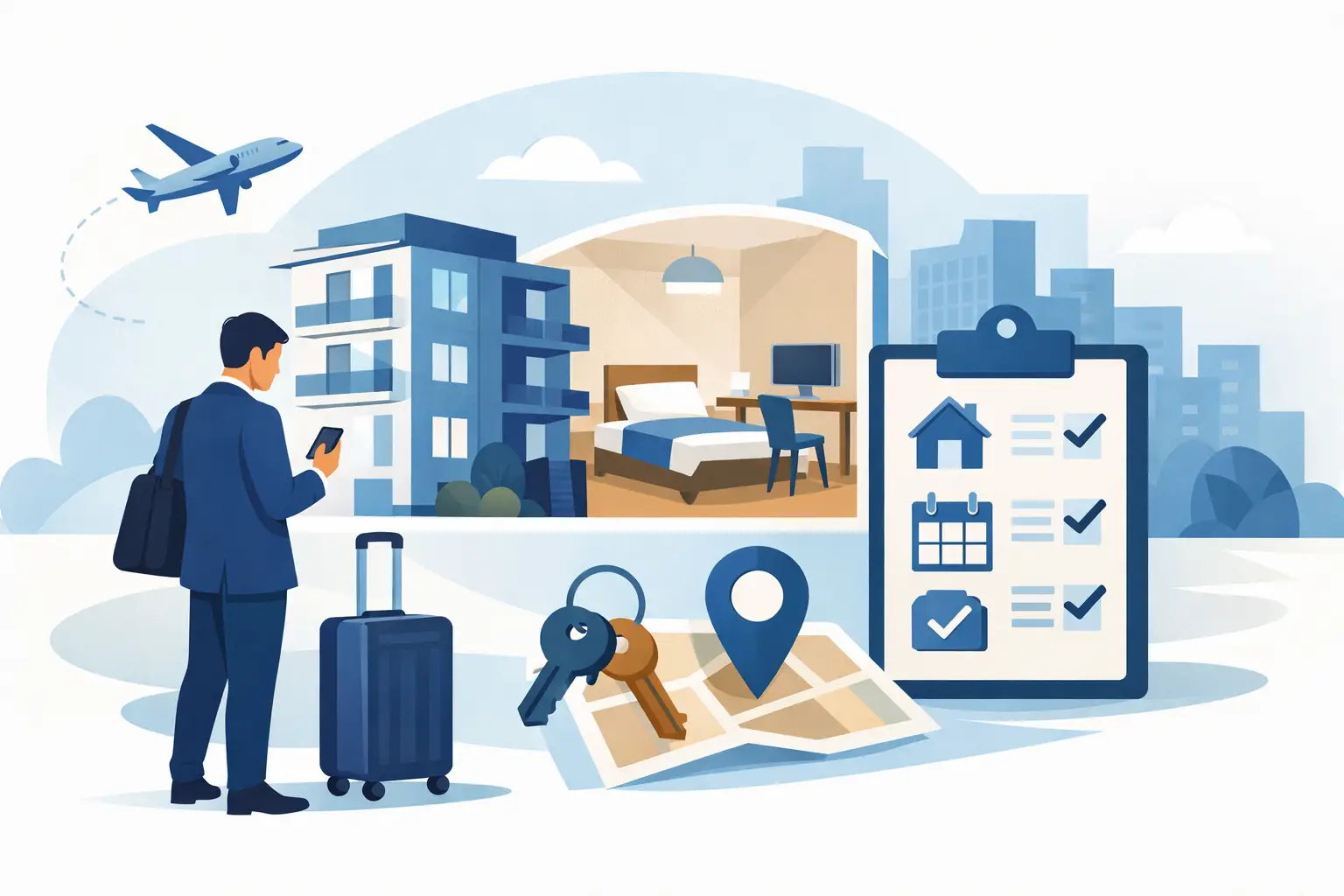
The property should also be truly move-in ready. That means furnished, equipped, connected, and usable immediately. If your staff arrives and still needs to sort out cookware, internet access, or utility activation, the accommodation is not turnkey. It is a project.
Flexibility matters because projects change
Long assignments are rarely static. Deadlines move. Teams expand. Contracts extend. A housing solution that looks efficient at the start can become restrictive if it cannot adapt to changing headcount or duration.
This is one reason flexible contract terms matter. Businesses need housing that can align with operational uncertainty without creating unnecessary financial exposure. The exact level of flexibility depends on the mission. Some companies prefer fixed stays for planning security. Others need the option to extend month by month as a site schedule evolves.
The important point is clarity. Know the minimum stay, extension terms, notice period, and occupancy rules before the team moves in. A clear arrangement avoids friction later, especially when assignment timelines shift.
Location should support the job, not the brochure
For long stays in Belgium, location decisions should be practical first. A visually appealing area is less important than access to the work site, transportation routes, and everyday necessities. Workers on assignment usually value convenience over prestige.
That means looking at commute time, parking availability, public transit if relevant, and access to grocery stores or basic services. Even a strong property loses value if it creates daily logistical problems. For operations managers, location is often where productivity gains or losses become visible quickest.
A useful rule is simple: the property should make the assignment easier to run. If it complicates transport, shift planning, or arrivals, it is the wrong location, regardless of price.
Why all-inclusive corporate housing simplifies management
The strongest long-stay housing setups remove avoidable tasks from the company. Instead of coordinating multiple vendors or separate service contracts, the business gets one operational package. That is often the deciding factor for companies managing several workers at once.
All-inclusive furnished corporate housing gives procurement and HR teams a cleaner process. One supplier, one invoice, one contact point, and a property designed for immediate occupancy. That is especially useful for international employers sending teams into Belgium without local housing infrastructure already in place.
For this reason, providers such as Belga Promo are positioned differently from standard rental options. The focus is not on leisure travel or individual relocation. It is on ready-to-live-in housing for companies that need practical accommodation for teams, with furniture, equipped kitchens, Wi-Fi, utilities, and business invoicing already built into the offer.
A simple evaluation framework for decision-makers
If you are comparing options, use criteria that reflect operational use instead of consumer preferences. Start with capacity and layout. Then confirm what is included, how quickly the property can be occupied, and whether the contract matches the likely mission timeline. After that, review commute practicality, support responsiveness, and billing simplicity.
This framework keeps the process focused. It also reduces the risk of choosing an option that looks competitive online but creates avoidable workload once the team is in place.
One more point matters here: speed. In workforce deployment, delays are expensive. Fast availability is not just convenient. It can determine whether a project starts on schedule or loses momentum before the first shift begins.
The right housing setup supports performance
When companies think about accommodation, they often focus on cost first. Cost matters, but performance matters too. Workers who sleep well, cook easily, travel less, and live in a stable environment are easier to retain and easier to schedule. That is not a soft benefit. On long assignments, it directly affects delivery.
So when you gérer logement longue mission entreprise, think beyond finding a temporary place to stay. The real goal is to create a housing setup that supports the mission with as little friction as possible. If the accommodation is ready, practical, and easy to manage, your team can focus on the job instead of the logistics around it.
The best long-stay housing decisions are rarely the most complicated. They are the ones that remove uncertainty early and keep the assignment running smoothly month after month.