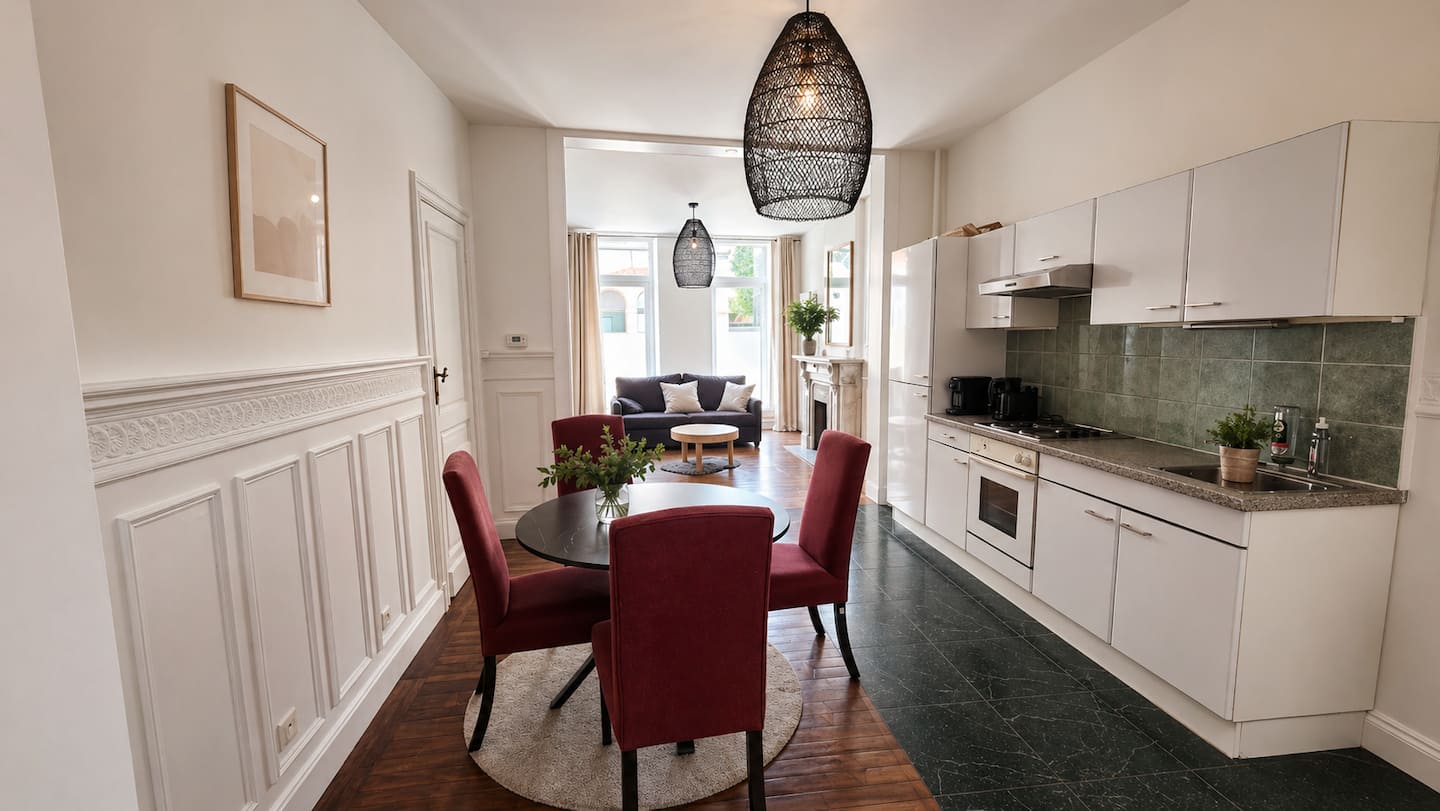
When a project runs for six weeks instead of six days, hotel booking stops being convenient and starts becoming expensive, fragmented, and hard to manage. That is where an appartement entreprise longue durée makes sense for companies housing employees, contractors, or technical teams in Belgium. It gives operations, HR, and procurement a practical way to place people quickly without rebuilding the housing plan every few nights.
For business use, long-stay accommodation is not just about having beds available. The real question is whether the property works operationally: enough capacity, ready-to-live-in setup, predictable billing, fast move-in, and terms that match the actual duration of the assignment. If one of those pieces is missing, the housing solution creates extra work instead of removing it.
Why an appartement entreprise longue durée works better than hotels
Hotels are useful for short trips, client visits, and one-person travel. They become less efficient when a company needs to house several workers for one month or more. Costs rise quickly, meal options are limited, and coordinating multiple reservations across changing schedules takes time from people who already have enough to manage.
A furnished corporate apartment or house changes that equation. Teams get shared living space, equipped kitchens, internet access, and a setup that feels stable enough for a real work cycle. From the employer side, the arrangement is easier to budget because utilities, furnishings, and occupancy terms are usually handled in one rental framework rather than spread across multiple vendors and receipts.
There is also a comfort issue that matters more than many companies expect. Workers who stay for weeks or months need more than a room and a breakfast buffet. They need somewhere they can cook, rest properly, keep personal belongings, and maintain a routine. Better living conditions often lead to fewer complaints and less turnover during demanding assignments.
What companies should check before choosing an appartement entreprise longue durée
The first point is occupancy fit. Some accommodations are marketed as corporate rentals but are really designed for one or two business travelers. That may work for an executive relocation, but it does not help if the requirement is to house six, eight, or more workers near a project site. Companies should confirm how many people can stay comfortably and whether the layout supports group occupancy.
The second point is readiness. A long-stay corporate apartment should be fully furnished and fully equipped from day one. That includes beds, seating, kitchen appliances, cookware, internet, and utilities. If your team needs to source missing items after arrival, the property is not turnkey, and the administrative simplicity disappears.
Contract structure matters just as much. Business housing rarely follows a perfectly fixed timeline. Projects extend, headcount changes, and teams rotate. A provider offering practical terms from one month onward is usually a better fit than one built around rigid residential leasing rules. Flexibility does not mean no structure. It means the contract reflects how companies actually deploy people.
Billing should also be checked early. Corporate clients generally need clear invoices issued to the company, not a patchwork of local service subscriptions, deposit complications, and reimbursement requests. Clean invoicing saves time for finance teams and reduces avoidable back-and-forth.
Cost control is not only about the monthly rate
Procurement teams often start with the headline rental price, which is reasonable, but that number alone does not tell the full story. The more useful comparison is total accommodation cost over the full assignment.
A hotel may appear simpler at first, yet the final spend often includes multiple rooms, breakfast costs, parking, laundry, and rate changes based on availability. A corporate apartment or house with all-inclusive pricing gives a more stable budget base. When furniture, Wi-Fi, utilities, and kitchen access are already included, the company can estimate actual housing spend with fewer surprises.
There is a second layer to cost control: administration. If your staff spends hours extending reservations, managing no-show fees, or moving workers between properties because rooms are no longer available, those internal costs add up. A suitable long-duration apartment reduces that friction. The financial value is not only in the rate but also in the time saved.
That said, the lowest price is not always the best business choice. If a cheaper property is far from the worksite, lacks proper equipment, or creates recurring maintenance issues, the operational cost may end up higher. Good corporate housing balances rate, location, and reliability.
Location should match the work, not just the map
For business stays, a good location is rarely about tourism or city-center prestige. It is about daily logistics. Can workers reach the site efficiently? Is the accommodation near major roads, industrial zones, transport routes, or customer facilities? Is parking available if teams travel with company vehicles?
These details affect punctuality, fuel use, fatigue, and planning. A property that looks attractive online but adds long daily travel time may create unnecessary strain on the team. For multi-month assignments, that issue becomes more visible every week.
The right area also depends on the type of assignment. A relocation for office staff may prioritize access to urban business districts and services. An industrial deployment may require fast access to ports, logistics corridors, or manufacturing zones. That is why companies should define operational priorities before reviewing properties.
Comfort matters because performance matters
Employers do not need luxury housing for temporary teams. They do need accommodation that is clean, functional, and comfortable enough for sustained use. That is a different standard from short-stay travel.
Shared accommodation works well when it is planned correctly. Teams usually benefit from enough sleeping capacity, practical communal space, and kitchens that support everyday meals. High-speed Wi-Fi is no longer a nice extra. For many roles, it is part of the working setup, even outside standard office hours.
A well-prepared property also reduces move-in stress. If employees arrive after travel or after starting on-site work, they need a place that is immediately usable. No waiting for internet setup, no arranging utility activation, and no need to buy basic household items. Ready-to-live-in housing supports business continuity from the first night.
When an appartement entreprise longue durée is the right choice
This model is especially useful for project-based industries, cross-border staffing, shutdowns, maintenance work, construction assignments, relocations, and temporary workforce expansions. In these situations, companies usually need speed, flexibility, and enough scale to house multiple people at once.
It is also a strong option when the assignment length is uncertain within a defined range. If a team may stay two months, then extend to six, corporate housing is often easier to manage than repeatedly renegotiating hotel inventory. A provider focused on furnished medium-term stays can usually handle that reality better.
For companies sending one senior employee for a few nights, a hotel may still be the simplest answer. For housing teams over several weeks or months, the balance usually shifts toward furnished apartments or houses designed for business occupancy.
What a reliable provider should deliver
A serious corporate housing provider should be able to answer practical questions quickly. How many people can stay? What is included? How fast is availability confirmed? What are the contract terms? Is invoicing company-friendly? Those are not secondary details. They are the core of the service.
Belga Promo is positioned around that operational need, with furnished and equipped accommodations for companies that need immediate, medium-term housing for teams in Belgium. The value is straightforward: capacity for group stays, all-inclusive setup, flexible duration, and fast deployment without the complexity of arranging every service separately.
For decision-makers, the best housing choice is usually the one that removes uncertainty. You want a property that is ready, suitable for the team size, aligned with the project location, and simple to manage from a billing and contract perspective. That is what turns accommodation from a recurring problem into a stable part of project planning.
If you are arranging housing for workers, technicians, or deployed staff, think beyond the nightly rate. The right long-stay apartment should make the assignment easier to run from the first arrival to the final checkout.