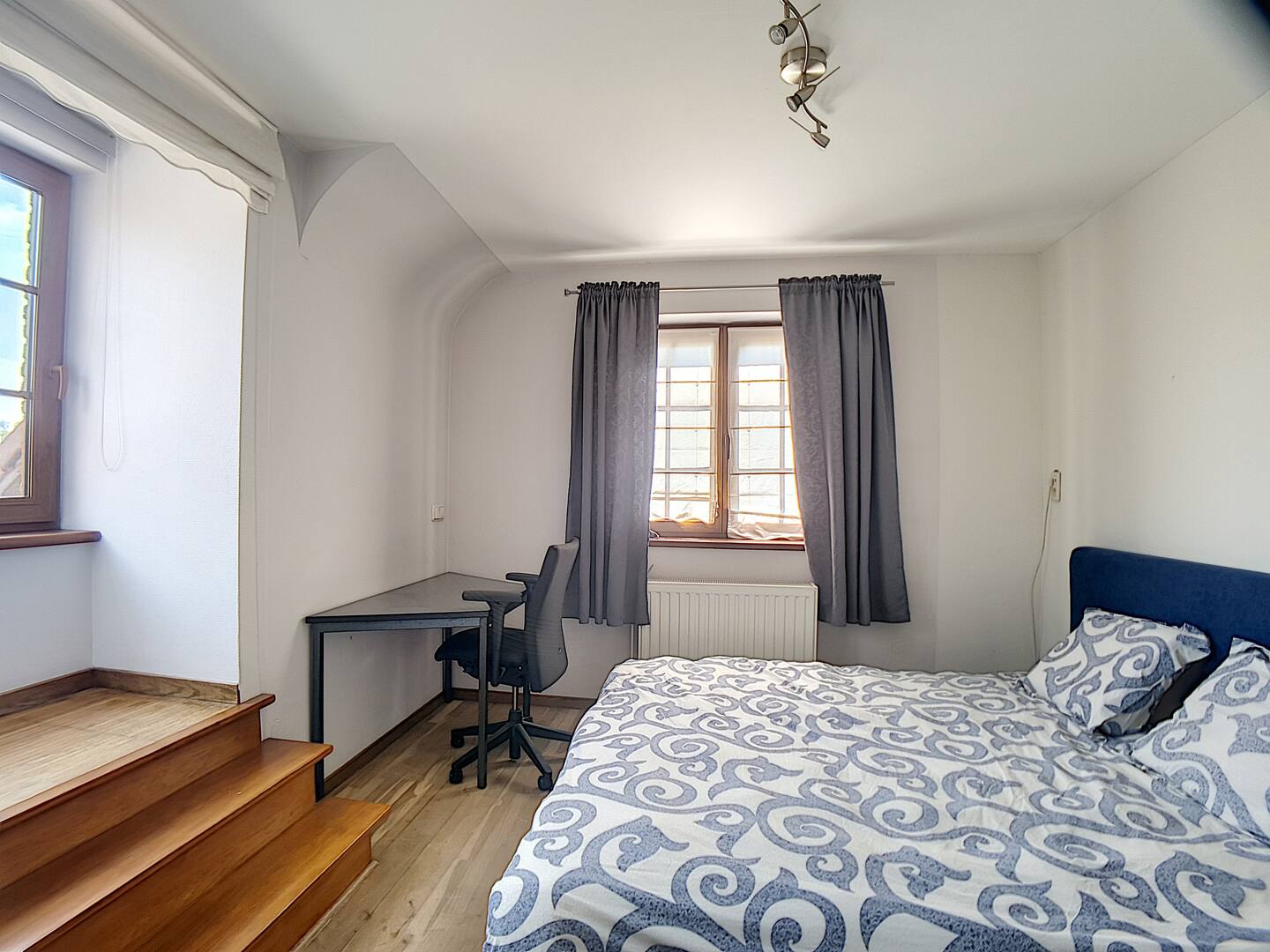

A guide to location meublée moyenne durée is most useful when a project is already moving: technicians are due on site, a new team is arriving, or hotel bookings are becoming too expensive and difficult to manage. For companies placing employees in Belgium for one month or longer, the right accommodation needs to be ready on arrival, suitable for shared living, and simple to administer from one point of contact.
Medium-term furnished rental fills the space between a short hotel stay and a conventional long-term lease. It gives employers a practical base for employees without asking them to furnish an apartment, open utility accounts, or manage separate bills during a temporary assignment.
What medium-term furnished rental means for employers
A medium-term furnished rental generally covers stays from one month to several months, and sometimes a year or more. It is designed for a defined professional need: a construction phase, industrial shutdown, installation project, relocation period, training assignment, or temporary staffing increase.
For a business, the key word is not simply “furnished.” A usable corporate rental must be ready for daily life from day one. That means beds and living furniture, an equipped kitchen, Wi-Fi, heating, electricity, water, and a clear arrangement for invoicing. If these elements are not confirmed in advance, a low advertised rent can quickly become an operational problem.
This model differs from booking hotel rooms for several weeks. Hotels may work for a short visit or a single executive, but they are often less practical for teams that need space, cooking facilities, laundry access, and a stable routine. A furnished house or apartment can also place several colleagues under one roof, which reduces fragmented bookings and simplifies transport planning.
Start with the operational requirements
The best property is not necessarily the closest or the cheapest. It is the one that allows the team to work, rest, and remain on assignment without unnecessary disruption. Before requesting availability, define the project requirements internally.
First, establish the occupancy. How many people will stay at the same time? Are they all arriving together? Will the number change after the first project phase? Group housing is particularly useful when six to sixteen workers need accommodation, but bed configuration matters as much as total capacity. A site manager may need a private room, while other team members may reasonably share depending on company policy and assignment length.
Next, confirm the location based on the real commute, not only the city name. A property near a project site, industrial zone, major road, rail connection, or client facility can save significant time over a multi-month deployment. A cheaper rental farther away may create higher fuel costs, longer shifts, and lower employee satisfaction.
Finally, set the expected dates and the level of flexibility needed. A project that may extend by four weeks requires a different contract approach from a fixed eight-week assignment. State this early. It helps the housing provider propose an option that matches the likely duration rather than a solution that must be renegotiated at short notice.
Guide location meublée moyenne durée: what should be included
For corporate housing, all-inclusive pricing is more than a convenience. It is a way to keep project costs visible. A monthly rate that bundles core living costs is easier for operations and finance teams to approve than a rental with separate utility contracts, unknown consumption charges, furniture purchases, and individual reimbursement claims.
Ask for a written list of inclusions. At minimum, the accommodation should address furniture, sleeping arrangements, kitchen equipment, internet access, utilities, and the billing method. For longer stays, practical details such as laundry facilities, parking, cleaning arrangements, waste collection, and maintenance response should also be clarified.
The kitchen deserves particular attention for group occupancy. Teams on early or late shifts often cannot rely on restaurant schedules. An equipped kitchen gives employees a realistic option to prepare meals, control personal spending, and maintain a more normal routine. It also reduces pressure on per diem budgets.
High-speed Wi-Fi is equally operational. Workers may need to receive schedules, complete administrative tasks, communicate with family, or attend remote meetings. Do not treat internet access as an optional extra when evaluating a property for a professional team.
Compare the total cost, not the nightly rate
A nightly hotel price can look manageable until it is multiplied by eight people over ten weeks. Medium-term housing is usually evaluated more effectively as a monthly team cost. Calculate the full accommodation spend, then compare it with the equivalent number of hotel rooms, including parking, meals, laundry, taxes, and the time required to coordinate separate reservations.
The lowest monthly rent is not automatically the lowest-cost choice. Consider what is excluded, the distance to the workplace, and whether the property can house the whole team. Splitting workers between several locations may be necessary in some markets, but it adds transport coordination, more invoices, and less day-to-day oversight.
A single company invoice is a meaningful advantage. It reduces expense reports and gives procurement or finance teams a cleaner record of project accommodation costs. For international employers, it can also avoid the difficulty of asking individual employees to sign local contracts or pay deposits personally.
Check contract terms before confirming the team
Medium-term rental agreements should reflect the realities of project work. Dates can move, headcount can change, and a client may extend a scope of work. Review the notice period, extension process, payment schedule, security deposit, occupancy rules, and any charges that may apply at departure.
It is sensible to confirm who is authorized to communicate changes. A clear contact person on the company side prevents conflicting instructions from multiple supervisors. The same applies to maintenance: employees should know how to report an urgent issue, while the employer should understand how non-urgent requests are handled.
Also be transparent about the intended use. Corporate housing for employees is different from a leisure booking. Tell the provider the nature of the assignment, the expected number of occupants, vehicle needs, and whether shift patterns may affect arrival times. This improves the accuracy of the offer and helps avoid unsuitable properties.
Make employee comfort part of the project plan
Comfort is often treated as secondary to price, but it directly affects attendance, retention, and productivity during long assignments. Employees who can sleep properly, cook meals, store belongings, and return to a calm home after a shift are better positioned to sustain demanding work schedules.
For stays beyond a few weeks, shared accommodation needs enough common space to remain workable. A property with only beds but no practical living area may be acceptable for a very short deployment, yet it can create friction over several months. The right balance depends on the group, shift rotation, and the privacy standards your company applies.
Local access also matters. Nearby grocery stores, parking, public transport, and basic services make a property easier to live in. These details may not appear first on a budget sheet, but they influence whether a temporary stay feels manageable for the people doing the work.
A practical request process for Belgian projects
When time is limited, send a complete request from the beginning. Include the desired location or worksite, arrival and departure dates, number of occupants, preferred room setup, vehicle or parking requirements, and the name of the company contact. Mention whether dates are fixed or likely to change.
Belga Promo provides furnished, equipped homes and apartments for professional teams in Belgium, with group capacities and rental periods structured around medium-term assignments. The practical benefit is immediate occupancy: employees arrive to a functioning living space rather than an empty unit with a list of tasks still to complete.
Availability can vary by location and season, so speed matters. However, fast confirmation should not replace a clear review of capacity, inclusions, and contract conditions. A short set of accurate questions before booking is usually more efficient than solving accommodation issues after the team has arrived.
For your next deployment, treat housing as part of site readiness rather than an afterthought. When the accommodation is confirmed early and built around the team’s actual working conditions, employees can focus on the assignment from their first day in Belgium.