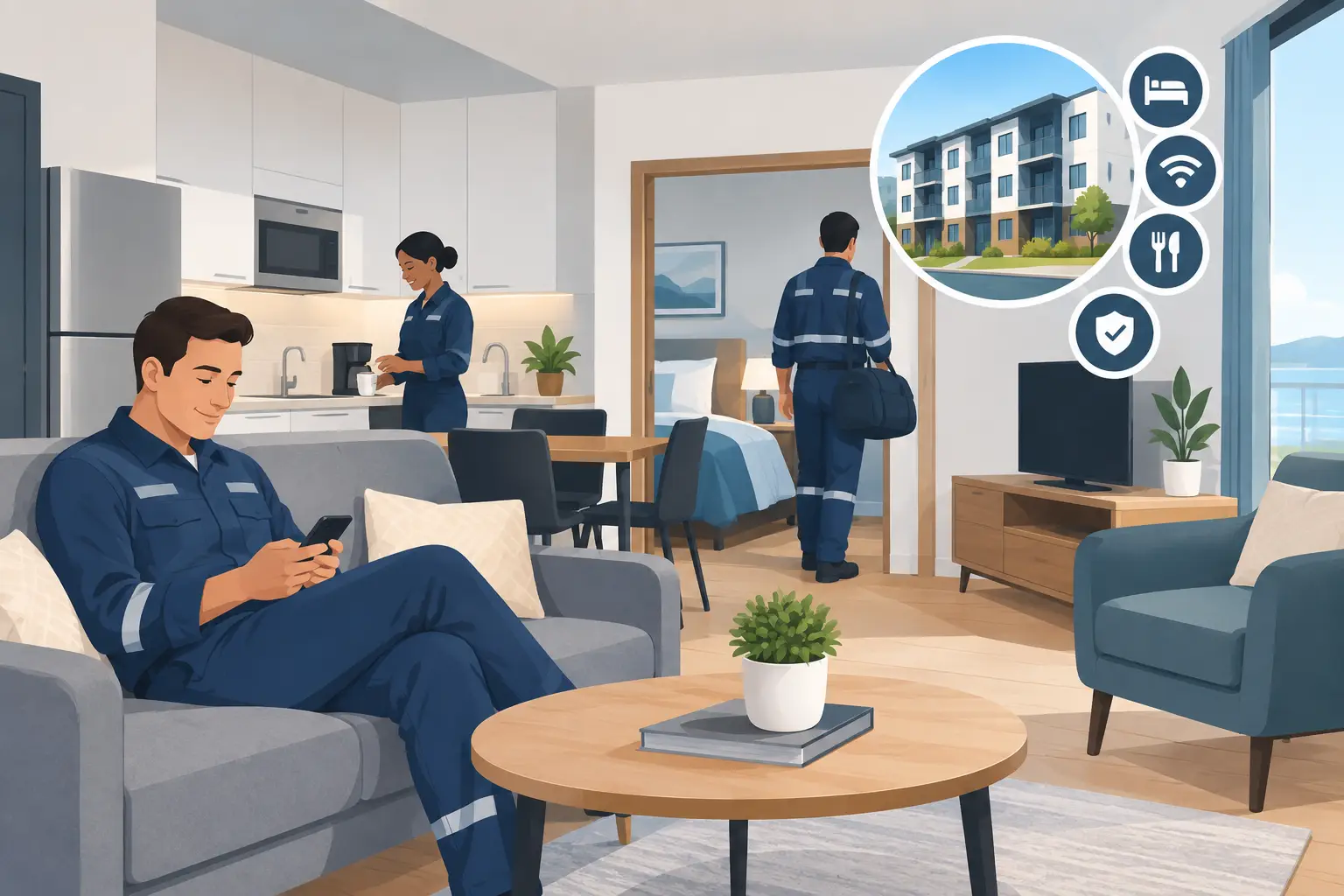

A project can be ready to start while its workforce is still scattered across expensive hotel rooms, long commutes, and last-minute bookings. Knowing how to source furnished workforce housing gives operations and procurement teams more control over cost, worker comfort, and site readiness - especially when a team needs to arrive in Belgium quickly and stay for several weeks or months.
The right property is not simply a furnished apartment near a job site. It is accommodation that works operationally: enough beds for the group, a usable kitchen, reliable internet, practical transport access, clear monthly pricing, and one point of contact when plans change. Start with the project requirements, then compare providers based on total value rather than nightly rates alone.
Start With a Clear Housing Brief
The fastest way to delay a housing search is to request availability without defining what the team actually needs. Before contacting suppliers, build a short housing brief that can be shared internally and with providers. This helps avoid unsuitable proposals and makes it easier to compare quotes.
Your brief should cover the project location, required move-in date, estimated departure date, number of occupants, and whether the team must stay together. Also confirm whether workers need individual bedrooms, on-site parking, proximity to public transit, or easy access to major roads. For construction, industrial, and technical assignments, travel time to the site can matter more than being close to a city center.
Include practical details that are often missed in early requests. Ask whether shifts require late check-in, whether vans need parking, whether employees will work remotely at times, and whether the project timeline may be extended. A property that appears suitable for four weeks may become costly or restrictive if the assignment runs for six months.
How to Source Furnished Workforce Housing by Location
Location should be assessed through the daily working routine, not a map pin alone. A lower rental price can lose its value if every worker spends an extra hour commuting each day. For a group of eight or more, the cost of lost time, fuel, parking, and fatigue can quickly exceed the difference in rent.
Define an acceptable travel radius from the project site. In Belgium, access to highways, industrial zones, ports, rail connections, and city ring roads can be more relevant than municipal boundaries. A property just outside the immediate area may offer better group capacity, easier parking, and a more practical route to work.
Check the neighborhood for daily living needs as well. Workers staying for a month or longer need grocery stores, pharmacies, laundromats if not included in the property, and places to eat nearby. Comfortable living conditions support attendance and retention during demanding projects.
When assignments cover multiple sites, consider whether one central property can serve the full team. This can simplify management and invoicing. If travel patterns differ significantly between crews, separate properties may be more efficient. The right answer depends on shift schedules, vehicle availability, and the cost of moving people each day.
Look Beyond Furniture and Bed Count
“Furnished” can mean very different things. A basic short-term rental may include beds and a sofa but still leave a company to arrange cookware, internet, utilities, linens, cleaning, or separate payments. That creates work for the coordinator and uncertainty for the budget.
For workforce housing, verify that the property is genuinely ready for occupancy. At a minimum, confirm the following:
- Beds and sleeping arrangements for every confirmed occupant
- A fully equipped kitchen suitable for group meal preparation
- High-speed Wi-Fi that can support several users at once
- Utilities included or clearly itemized in the quoted rate
- Laundry facilities or a practical laundry option nearby
- Linens, basic household equipment, and maintenance support
Capacity also requires closer review. A property advertised for 10 people may technically sleep 10, but the layout may not work well for a professional team. Ask about bedroom distribution, number of bathrooms, kitchen size, dining space, and common areas. For longer stays, these details affect privacy, morale, and the condition of the property.
A house or apartment designed for group occupancy is often more practical than booking separate small units. It gives the team a shared base, reduces check-in administration, and usually provides better value for medium-term stays. However, separate units can be preferable when employees have different schedules, seniority requirements, or privacy expectations.
Compare Total Cost, Not the Headline Rate
Hotels may appear easier to book, but their cost structure often becomes difficult to manage for stays longer than a few weeks. Daily room rates, restaurant spending, parking, laundry, and fragmented invoices can add up quickly. Furnished workforce housing typically gives teams more space and the ability to prepare meals, while providing a more predictable monthly cost.
When comparing options, request an all-inclusive quote that identifies rent, utilities, internet, parking, cleaning, deposits, taxes, and any setup fees. If costs are variable, ask what can cause the final invoice to change. This is especially important for utility consumption, extensions, damage deposits, and after-hours arrivals.
Do not assume the lowest monthly rent is the lowest total cost. A cheaper unit without Wi-Fi, parking, equipment, or included utilities may require several additional suppliers. A slightly higher all-inclusive rate can be easier to approve, track, and allocate to the project budget.
For procurement teams, one company invoice is a major operational advantage. It reduces expense claims, avoids individual employee reimbursements, and makes it easier to reconcile accommodation spending across a project. Confirm the invoicing entity, payment terms, currency requirements, and whether costs can be assigned to a purchase order or project reference.
Check Availability and Flexibility Early
The best group properties are often booked before a project is fully confirmed. Once dates are reasonably clear, request availability immediately. Give providers the full expected date range, not only the first month, so they can identify properties that can accommodate the team for the entire assignment.
Flexibility matters because project schedules change. Permits may be delayed, site work may finish early, or an additional crew may be added. Review the minimum rental period, notice period, extension process, and cancellation terms before committing. A contract that looks inexpensive can become expensive if it does not allow realistic changes to staffing levels or end dates.
Ask what happens if the team grows from six people to ten, or if only part of the group must remain after the main work is complete. A provider with multiple group properties may be able to offer a practical alternative rather than forcing the company into a new search.
Fast communication is equally valuable. When workers are traveling from abroad or a project launch is approaching, the housing contact should be able to confirm availability, explain what is included, and provide clear move-in instructions without unnecessary back-and-forth. Multilingual support can be particularly helpful for international teams arriving in Belgium.
Verify the Provider Before You Commit
A polished listing is not enough. Confirm that the provider manages corporate stays regularly and understands the needs of project teams. Ask direct questions about check-in, maintenance response, emergency contact procedures, inventory, cleaning, and damage reporting.
It is also useful to confirm whether the accommodation is set up for company use rather than leisure travel. Corporate housing providers should be able to address group capacity, contract duration, billing, and extensions clearly. If answers are vague, the operational burden may fall back on your site manager or HR team.
Belga Promo, for example, focuses on fully furnished and equipped houses and apartments for professional teams in Belgium, with capacities generally ranging from 6 to 16 people. This type of group-focused model can reduce the number of bookings, contacts, and invoices required for a deployment.
Before move-in, request a written confirmation covering the address, arrival process, occupancy limit, included services, payment schedule, and contact details for support. Share the house rules and check-in information with the team in advance. A simple arrival plan prevents avoidable calls when employees reach the property after a long journey.
Build Housing Into Project Planning
Workforce accommodation should be treated as a project resource, not an emergency purchase. Bringing housing into the planning process early allows you to reserve suitable group properties, negotiate clearer terms, and avoid peak-period pricing.
Keep a record of what worked on previous assignments: preferred locations, actual commute times, useful property features, supplier response speed, and final cost against budget. Over time, this creates a repeatable sourcing process for future deployments.
The most effective housing arrangement is one your workers can move into without shopping for essentials, your finance team can pay through a clear invoice, and your operations team can stop thinking about once the project is underway.