When a project starts in two weeks and six technicians need to be on-site for three months, poor housing decisions show up fast. Hotel costs climb, commuting becomes a daily issue, and admin teams end up managing separate bookings, invoices, and extensions. That is why many companies now look for a more structured way to organiser logement temporaire pour salariés without creating extra work for HR, operations, or procurement.
The right setup is not just about finding available beds. It is about securing housing that matches the length of stay, the size of the team, the project location, and the company’s internal processes. For employers managing staff mobility in Belgium, temporary employee housing works best when it is treated as an operational requirement, not as a last-minute travel task.
What makes temporary employee housing hard to manage
Short business trips are relatively simple. A few hotel rooms for two nights can be booked quickly and expensed later. The challenge changes when employees, contractors, or technical teams need accommodation for several weeks or months.
At that point, companies are no longer solving a travel problem. They are solving a housing problem with business constraints. The accommodation must be ready immediately, furnished, connected to Wi-Fi, and practical for daily living. It also needs to be close enough to the worksite to avoid wasted time and transport costs.
There is also a financial trade-off. Hotels may look easy at first, but for medium-term stays they often become the most expensive option. Traditional residential rentals can reduce monthly cost, but they usually require furniture, utility setup, deposits, long lease commitments, and more administration than most companies want to handle for a temporary assignment.
This is why many firms prefer a furnished corporate housing model. It gives them a ready-to-live-in solution with one predictable monthly structure rather than multiple fragmented costs.
How to organize temporary housing for employees without delays
The fastest way to organize temporary housing for employees is to define the assignment before searching for properties. Many delays happen because the housing request is too vague. A company asks for “accommodation near Brussels” or “housing for a team,” but key details are missing.
Start with four operational questions. How many people need to stay there? How long will they stay? Where do they need to work each day? What level of privacy or room sharing is acceptable? Those answers shape the housing type immediately.
A two-person management relocation and a twelve-person industrial team should not be handled the same way. One may require separate apartments. The other may be better served by a fully equipped house designed for group occupancy. If you use the same sourcing logic for both, you usually overpay or create unnecessary friction for the people staying there.
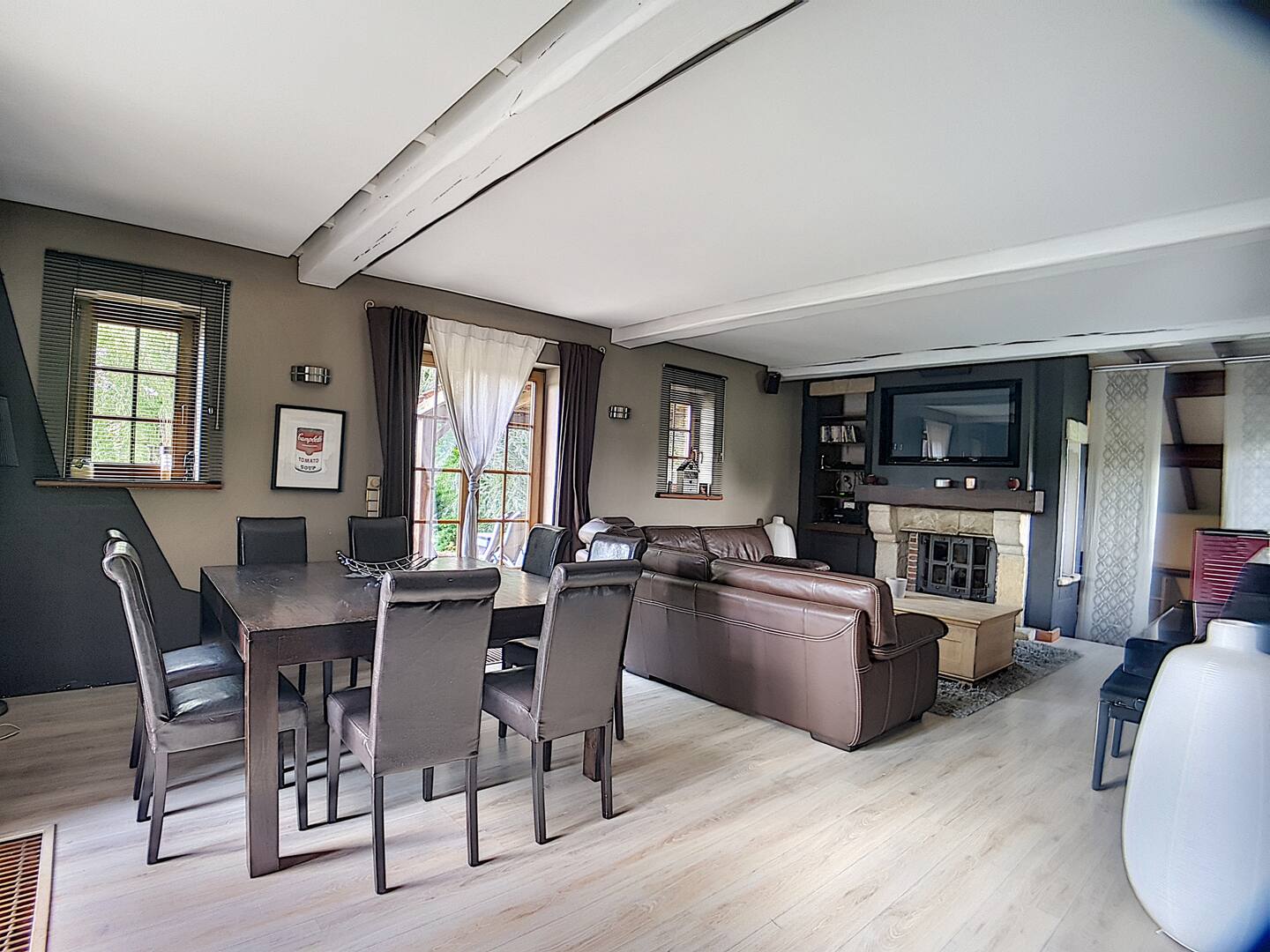
The next step is to define what must be included from day one. For most corporate stays, the minimum practical package is furniture, equipped kitchen, beds, Wi-Fi, utilities, and a contract structure that supports company invoicing. If these items are not included, the apparent monthly rate can be misleading.
That is where procurement teams often need to look beyond headline price. A lower base rent is not necessarily cheaper if it requires separate utility accounts, internet installation, furniture rental, or manual reimbursement by employees.
The key criteria that matter most
Location should be assessed in terms of work efficiency, not just city name. A property near the actual job site, industrial zone, or transport route is often more valuable than one in a central area with a longer daily commute. For project teams, thirty extra minutes of travel each way quickly becomes a real cost.
Capacity is equally important. Group accommodation can produce strong savings compared with booking multiple hotel rooms, but only if the layout is suitable. Companies should verify how many people the property can realistically host, how bedrooms are arranged, and whether shared spaces can support daily use by the team.
Comfort also affects performance more than some employers expect. Workers staying for one to six months need more than a place to sleep. They need a livable environment where they can cook, rest, connect to reliable internet, and maintain a routine. Housing that is too cramped or too basic can create dissatisfaction, higher turnover risk, and repeated requests for changes.
Administrative simplicity should not be treated as a secondary factor. A company housing solution is easier to manage when invoicing is handled directly with the employer, contract terms are clear, and extensions can be arranged without rebuilding the process from scratch. That reduces internal workload, especially when several teams are moving across sites during the year.
Organiser logement temporaire pour salariés at scale
The process becomes more complex when a company needs to house several employees across multiple projects. In that case, ad hoc booking creates inconsistency. One team ends up in hotels, another in short-term rentals, and a third in housing that does not match company standards.
A better approach is to standardize the decision framework. Define what your company accepts in terms of maximum commute, minimum equipment, occupancy ratio, contract flexibility, and invoice structure. Once those criteria are set, housing decisions become faster and easier to compare.
This matters most for operations managers and HR teams dealing with recurring assignments. If your business regularly deploys technicians, subcontractors, installers, or site teams in Belgium, temporary housing should be sourced like any other operational service. That means using providers that understand recurring workforce needs, not just one-off leisure bookings.
In practice, this often favors furnished houses and apartments built around professional occupancy. A turnkey setup with utilities, Wi-Fi, furniture, and equipped kitchens included gives companies a cleaner budget and faster move-in timeline. It also avoids the gap between lease signing and actual usability.
Belga Promo works in this space because many employers need exactly that kind of ready-to-live-in setup for teams rather than individual tourists or short-stay travelers.
Common mistakes that increase cost
One of the most common mistakes is booking too late. Last-minute sourcing reduces choice, pushes companies toward expensive hotel inventory, and increases the chance of placing staff far from the worksite. Even a short planning window is better than reacting after the start date is fixed.
Another frequent issue is underestimating stay duration. A company may initially expect a one-month assignment, then extend it twice. If the original housing arrangement is inflexible, the extension becomes costly or forces a move. It is usually better to choose a flexible contract model from the start when timelines may shift.
There is also the mistake of focusing only on nightly or monthly rate without calculating total occupancy cost. Transport, separate utility setup, internet, laundry needs, and admin time all affect the real figure. A slightly higher all-inclusive rate can be more efficient than a lower rent with multiple operational add-ons.
Finally, companies sometimes ignore the employee experience because the housing is temporary. That can backfire. Workers who are deployed away from home for weeks at a time need practical living conditions. Reasonable comfort is not a luxury item in this context. It supports retention, morale, and day-to-day reliability.
When hotels still make sense and when they do not
Hotels are still useful in some situations. If an employee is staying for a few nights, if dates are uncertain, or if there is only one traveler with frequent schedule changes, a hotel may remain the simplest choice.
But once the stay becomes medium-term, the logic changes. Teams need kitchens, common living space, laundry access, stable internet, and room to settle into a working routine. Employers also need more predictable billing and lower average cost per person. That is where furnished corporate housing usually outperforms hotel booking.
The decision depends on duration, team size, and project stability. The longer the stay and the larger the group, the stronger the case for a dedicated housing solution.
A practical way to evaluate providers
When comparing housing providers, companies should ask direct operational questions. Is the accommodation fully furnished and equipped? Are utilities and Wi-Fi included? Can the property host the required number of people comfortably? Is invoicing handled for the company rather than for individual employees? Can contract dates be adjusted if the project changes?
If those answers are unclear, the offer is not truly turnkey. And if it is not turnkey, your internal team will end up filling the gaps.
For employers, the best temporary housing arrangement is usually the one that reduces decision time, move-in time, and management time at the same time. A property may look attractive in photos, but if the setup creates extra coordination around setup, billing, or occupancy, it is not efficient for business use.
Temporary employee housing works best when it is practical, ready, and easy to manage from the first day of the assignment. If the accommodation helps your team arrive, settle, and work without disruption, it is doing its job.